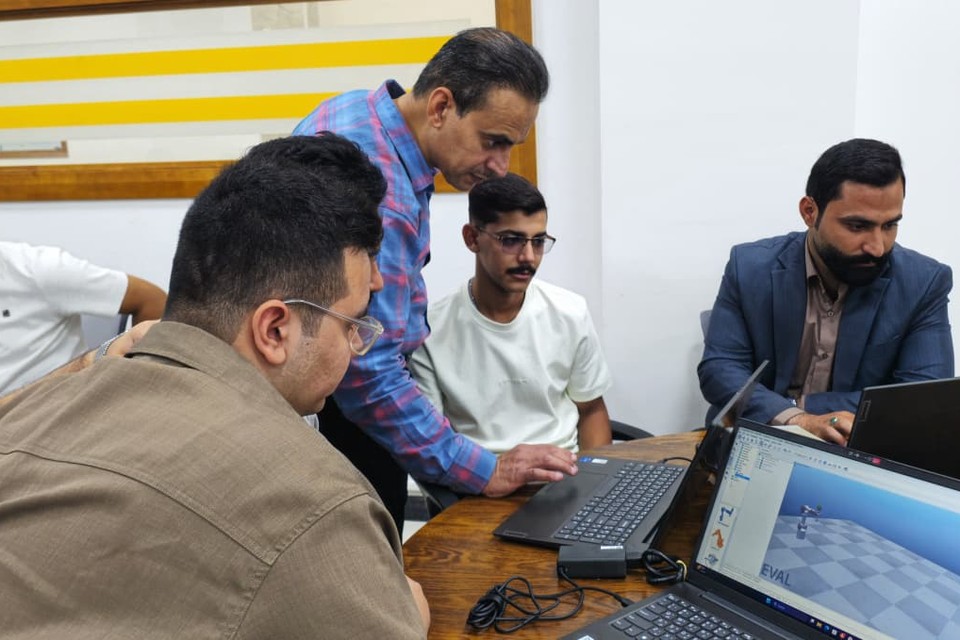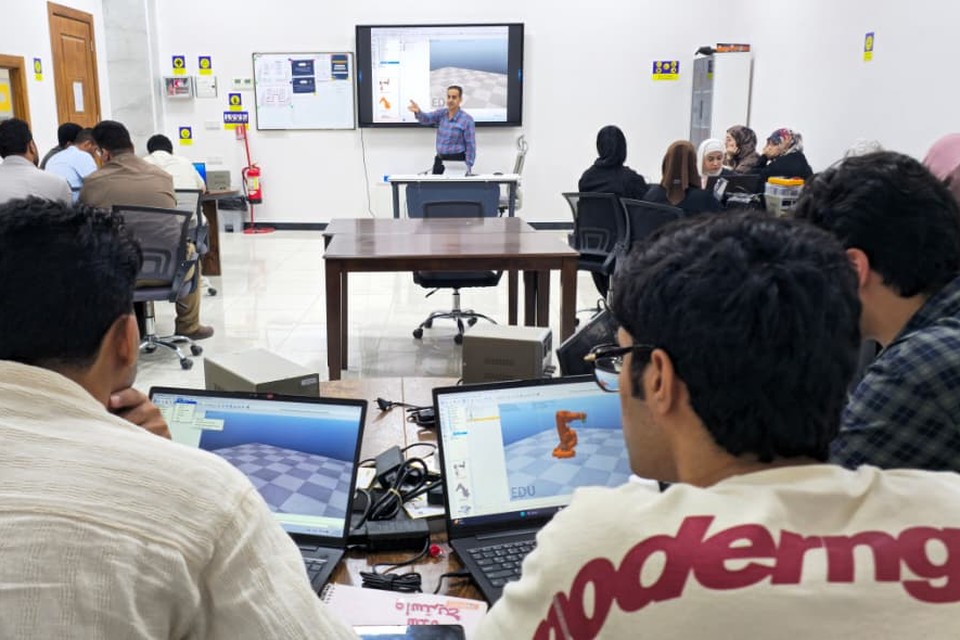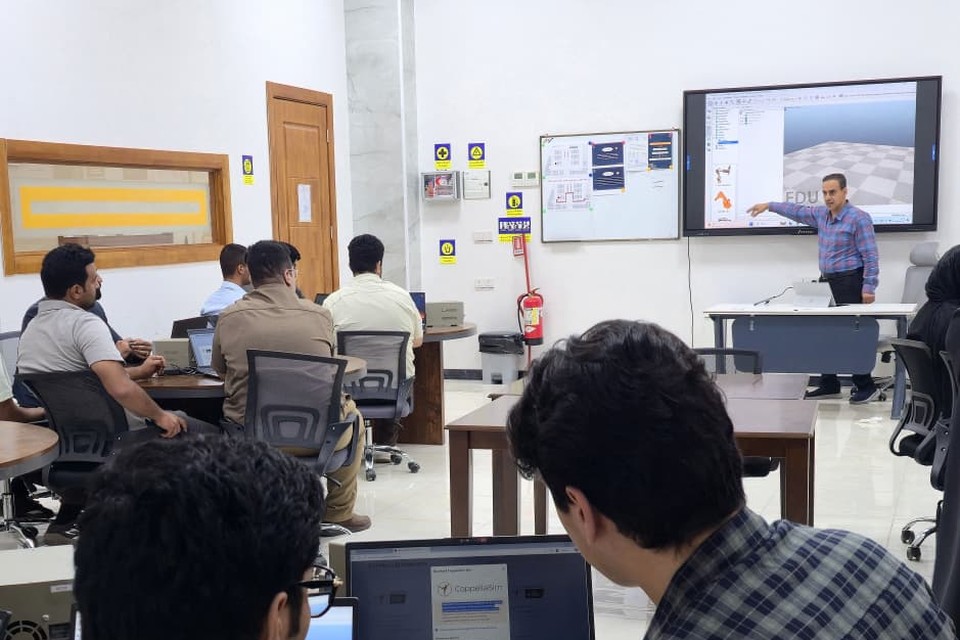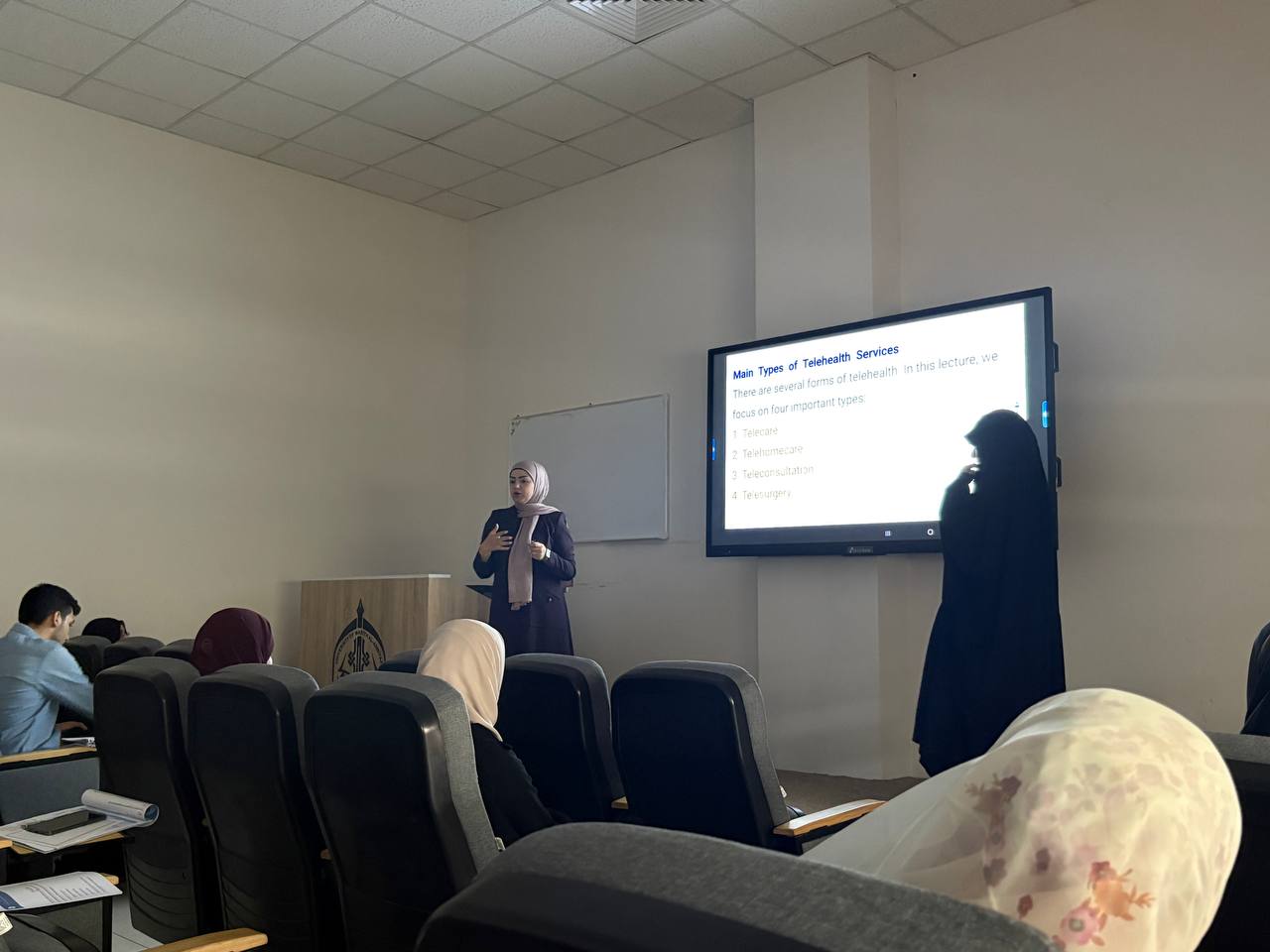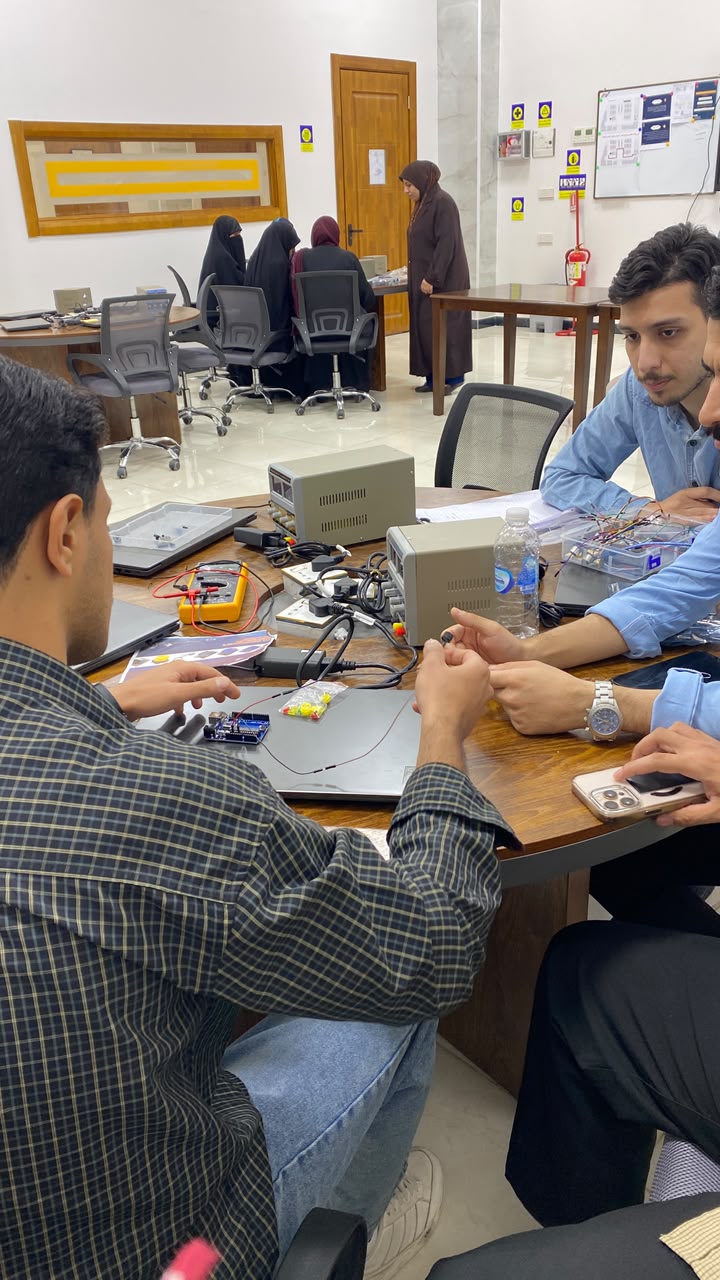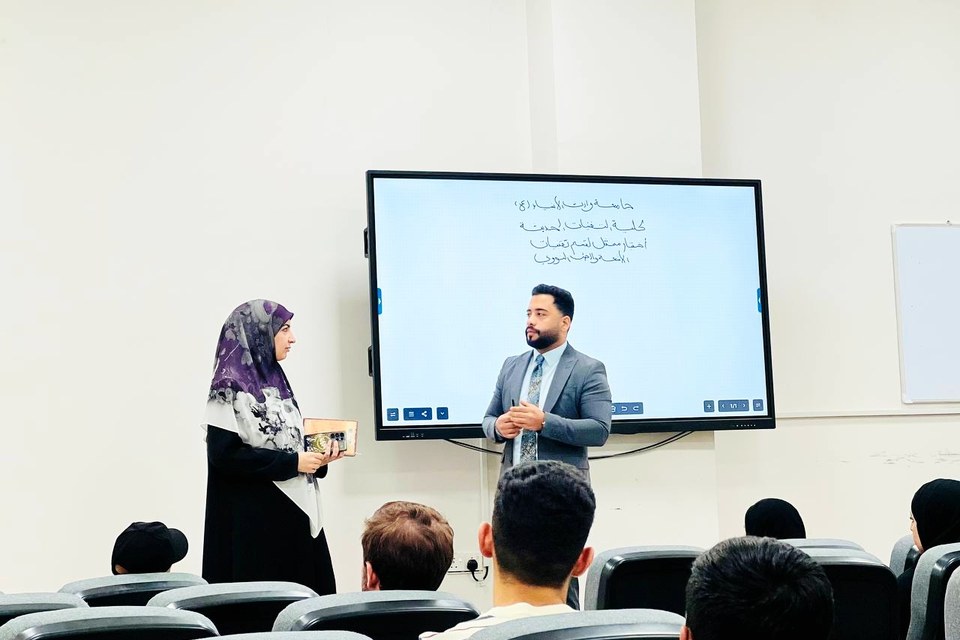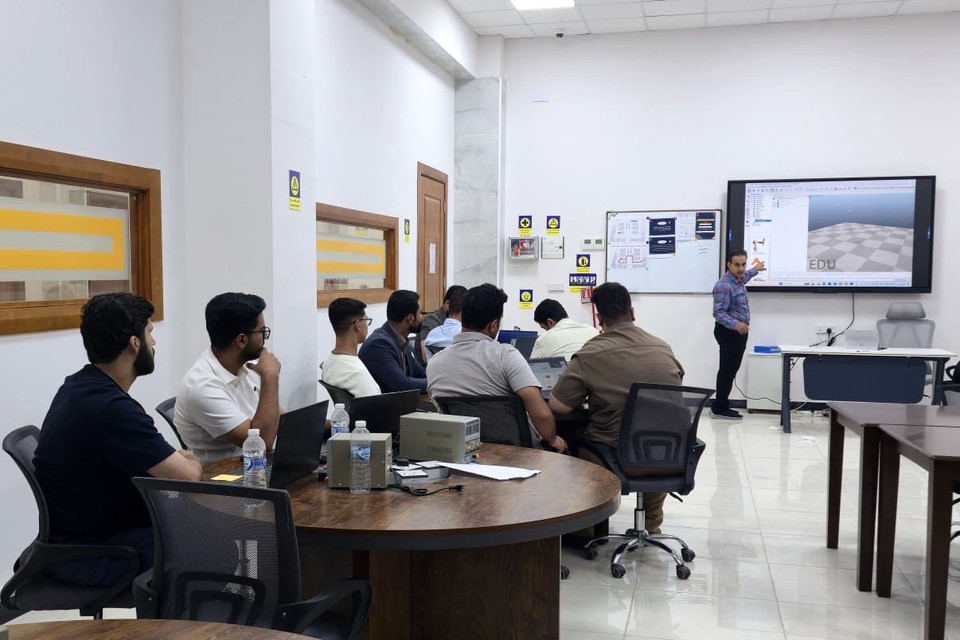


Students of the Department of Robotics and Artificial Intelligence Engineering Technologies at the College of Advanced Technologies, University of Warith Al-Anbiyaa, took part in the second lecture and lab session of Robotics Fundamentals, learning the mechanical structures of robotic arms and then applying them in a simulation environment.
| Course | Robotics Fundamentals |
| Activity | Second lecture and lab session |
| Department | Robotics and Artificial Intelligence Engineering Technologies |
| Stage | Second year |
| Instructor | Dr. Riyadh Nazar Ali Algburi |
| Venue | Robotics Laboratory |
| Date | 17 October 2026 |
Activity Highlights
- Mechanical structures of robotic arms, joint types and degrees of freedom, and how link arrangement shapes motion and workspace.
- End-effector types, defining the Tool Centre Point (TCP), and the difference between accuracy and repeatability.
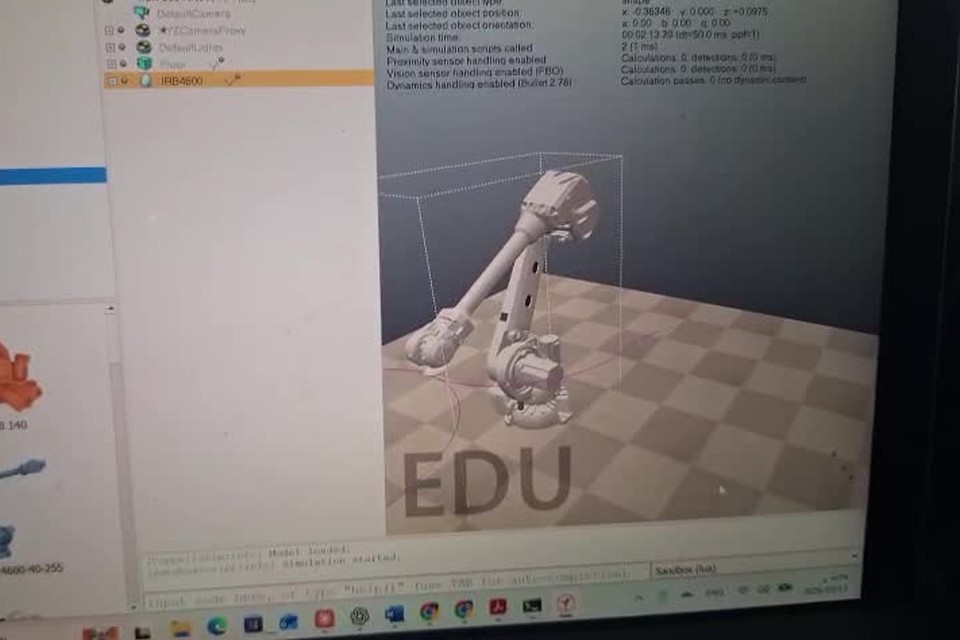
- Installing CoppeliaSim Edu and running first experiments with industrial robotic arms in simulation.
- An introduction to forward kinematics (FK) and inverse kinematics (IK) for relating joint variables to tool position.
Key Terms from the Lecture
|
DoF — Degrees of Freedom The number of independent motions an arm can perform; more DoF means more flexible reach. |
TCP — Tool Centre Point The reference point at the tool tip that the robot is programmed to bring to the target. |
|
FK — Forward Kinematics Computing the tool’s position and orientation from known joint angles. |
IK — Inverse Kinematics Computing the joint angles needed to bring the tool to a desired position. |
“Simulation lets students try, fail and try again without breaking a real arm. When they see with their own eyes how changing a single joint angle reshapes the whole tool path, kinematics stops being symbols on the board and becomes real understanding.”
— Dr. Riyadh Nazar Ali Algburi, Course Instructor
Combining the lecture with hands-on simulation strengthened students’ grasp of core robotics principles and their skills in observation, analysis and working with simulation environments, paving the way for robot programming, control and sensing.