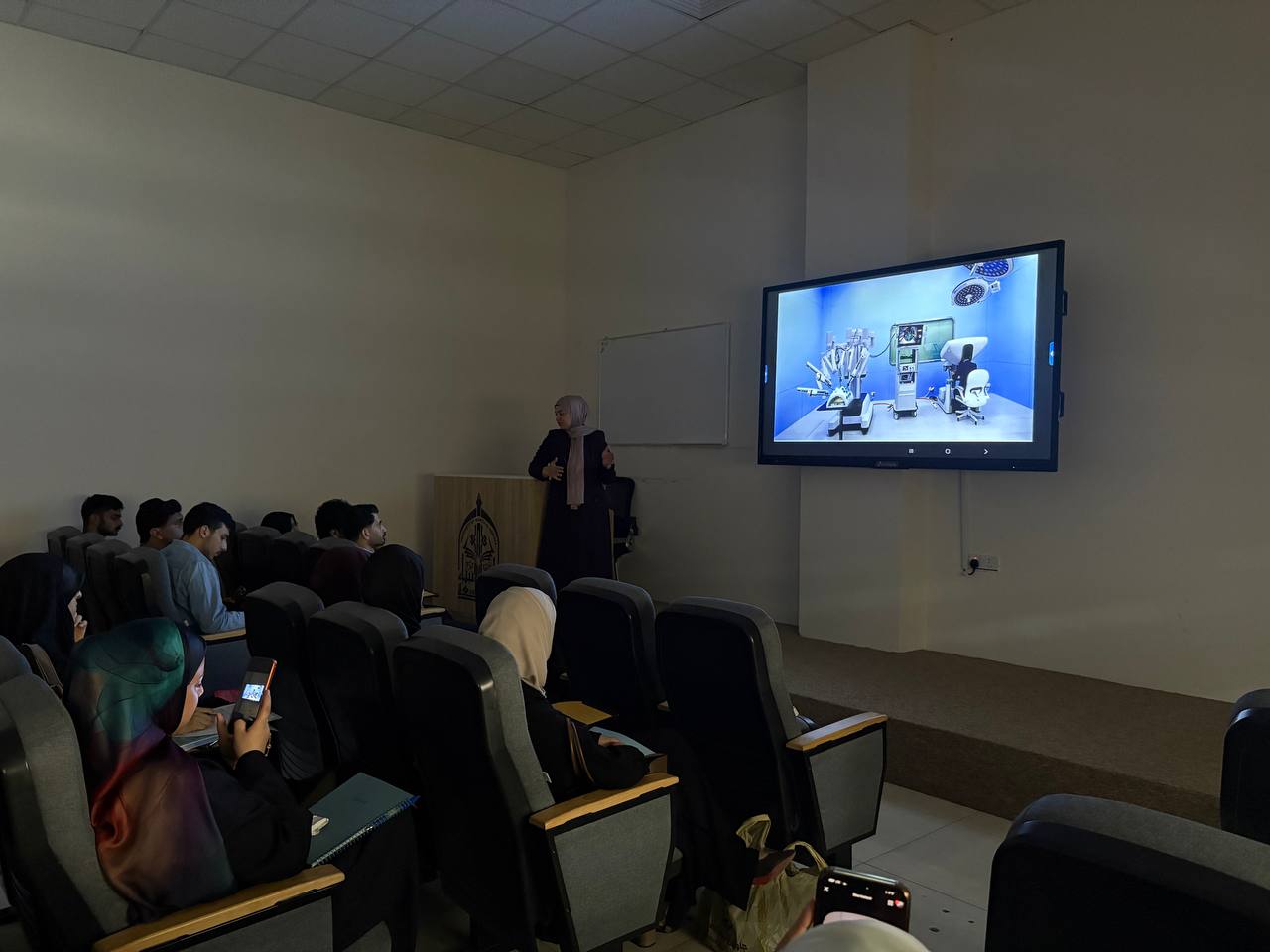
As part of the scientific lectures of the Department of Smart Digital Health Technologies at the College of Modern Technologies, Warith Al-Anbiyaa University, students were introduced in the Telehealth lecture to the types of remote healthcare services and their key medical applications, including telesurgery, which represents one aspect of the integration between digital technologies and robotic systems in advancing healthcare services.
Activity
Scientific lecture
Course
Telehealth
Stage
Second Stage
Date
19 October 2026
Lecture Highlights
Defining telehealth as the use of digital communication and information technologies to provide healthcare services when the patient and the healthcare provider are in different locations.
Main types of telehealth services: telecare, telehomecare, teleconsultation and telesurgery.
Reviewing robotic surgery systems as an applied example of the integration between digital technologies and robotic systems.
The lecture strengthened students' scientific knowledge and deepened their understanding of the role of technology in bringing about qualitative shifts in healthcare delivery and keeping pace with rapid developments in digital health.
Explore the Department of Smart Digital Health Technologies →
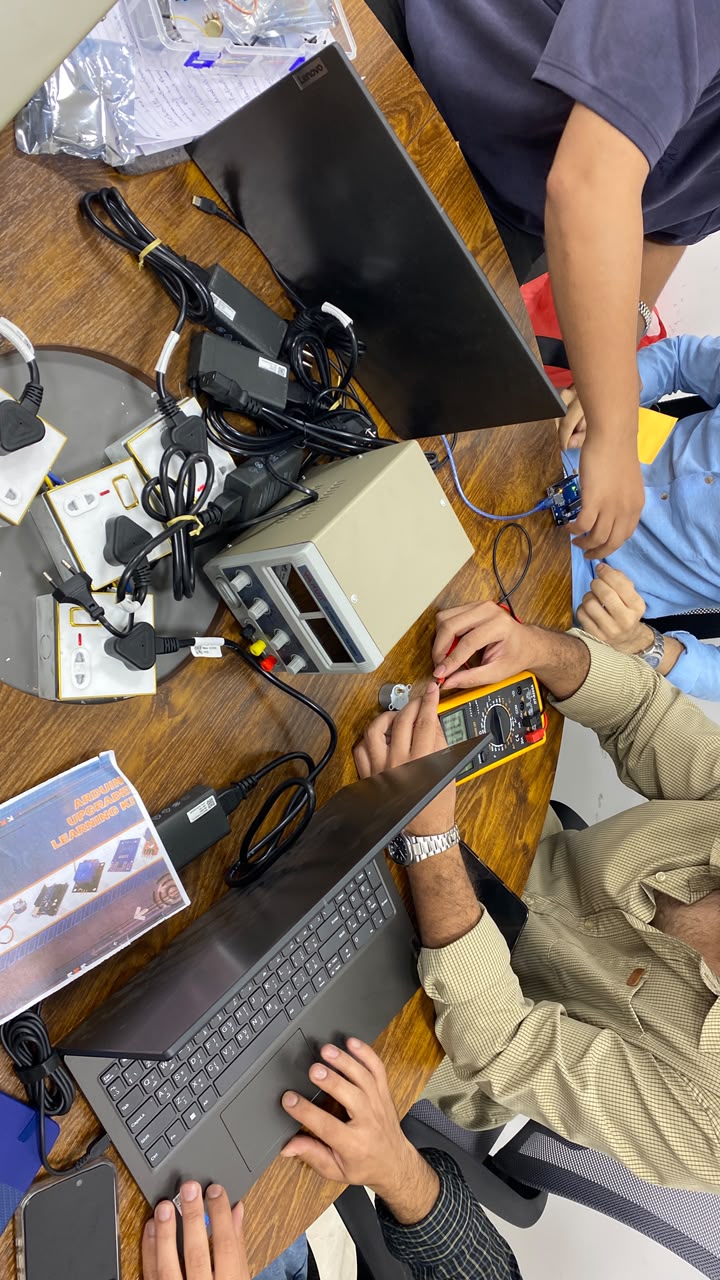
Students of the Department of Smart Digital Health Technologies at the College of Modern Technologies, Warith Al-Anbiyaa University, carried out a practical application in the Telehealth course, which involved connecting electronic circuit components using an Arduino board and operating a light-emitting diode (LED).
Activity
Practical application using the Arduino board
Course
Telehealth
Stage
Second Stage
Date
19 October 2026
Application Highlights
Explaining the board pin connections and operating voltages before starting the application.
Connecting the electronic circuit components using the Arduino board.
Operating the LED and verifying the circuit using measuring instruments and power supplies.
The application aims to develop students' electronics skills and to link theoretical concepts with hands-on experiments in the field of digital health technologies.
Explore the Department of Smart Digital Health Technologies →
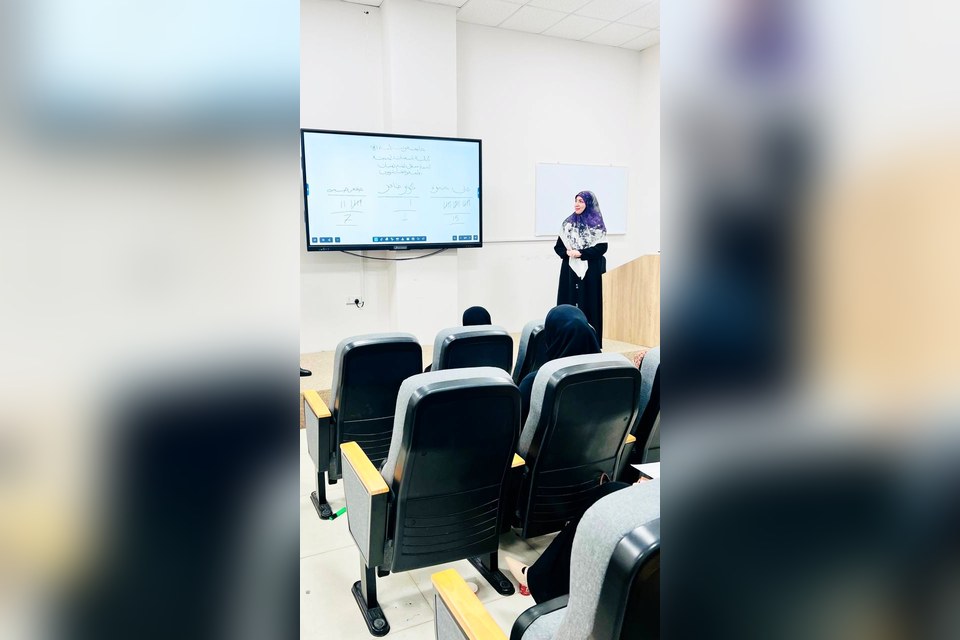
The Department of Radiology and Nuclear Medicine Technologies at the College of Advanced Technologies, University of Warith Al-Anbiyaa (peace be upon him), held elections to choose its student representative, attended by the Head of Department, Dr. Yusor Fadhil Abdulameer, and Asst. Lect. Mohammed A. M. Dhalemi.
The elections resulted in student Ali Hamza Hadi being elected as the department's student representative. We wish him every success in carrying out his duties.
Department
Radiology and Nuclear Medicine Technologies
Elected Representative
Ali Hamza Hadi
Supervised by
Dr. Yusor Fadhil Abdulameer, Head of DepartmentAsst. Lect. Mohammed A. M. Dhalemi
Date
19/10/2026
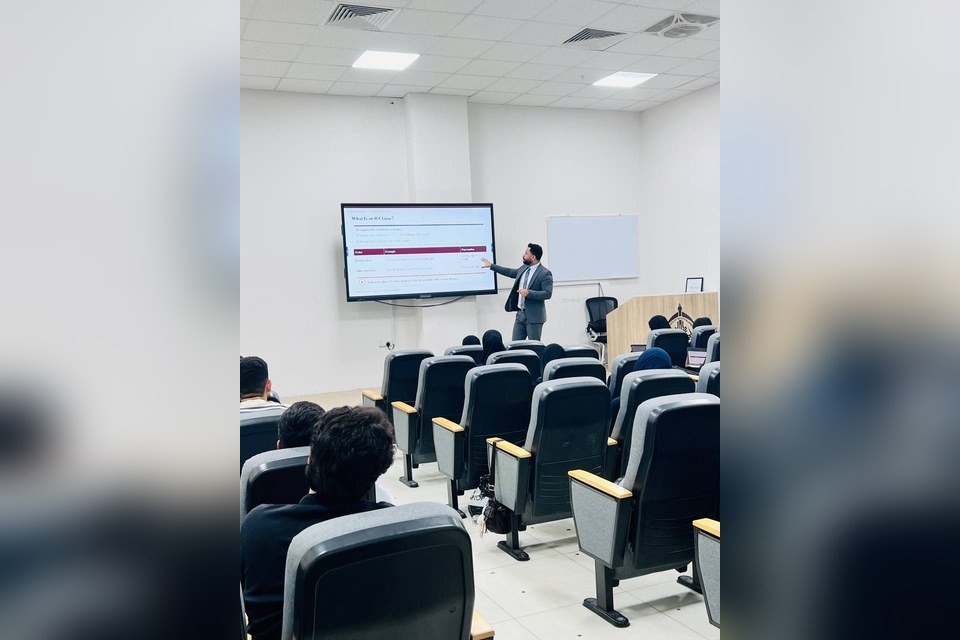
Students of the Department of Radiology and Nuclear Medicine Technologies at the College of Advanced Technologies, University of Warith Al-Anbiyaa (peace be upon him), continue their English Language lectures. Today's lecture covered conditional sentences (If clauses), with the aim of strengthening students' language skills and developing their ability to use English.
Course
English Language 2
Lecture Topic
Conditional Sentences (If Clauses)
Department
Radiology and Nuclear Medicine Technologies
Stage
Second
Lecturer
Asst. Lect. Mohammed A. M. Dhalemi
Venue
Classroom
Date
19/10/2026
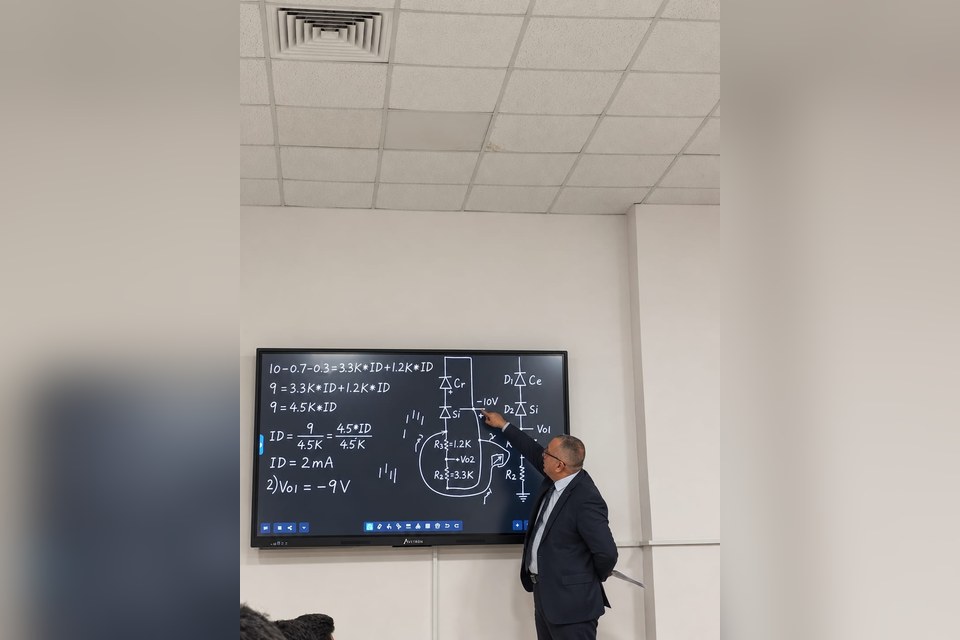
Students of the Department of Electrical Engineering Technologies continue their lectures in Electronic Essentials, part of an academic path that builds their scientific knowledge and their skills in electronics and engineering applications.
Today's lecture covered the types and characteristics of diodes. It introduced the main diode types and their electrical properties and the role this component plays in electronic circuits. It also explained how a diode works under forward and reverse bias, and walked students through the related calculations and the analysis of diode behaviour in circuits.
These lectures reflect the department's commitment to developing students' scientific and practical skills and their ability to understand electronic components, analyse circuits and apply them across engineering fields.
Course
Electronic Essentials
Lecture Topic
Types and Characteristics of Diodes
Department
Electrical Engineering Technologies
Stage
Second
Lecturer
Asst. Lect. Ali Abd Al-Hussein
Venue
Classroom
Date
18/10/2026
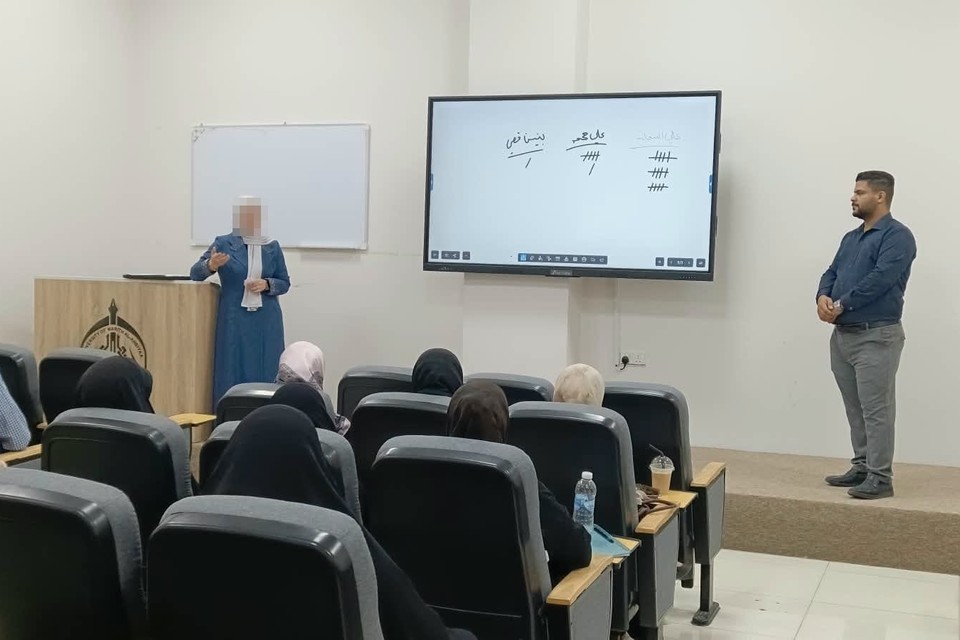
As part of its efforts to strengthen a culture of participation and reinforce the principles of transparency and democracy, the Department of Smart Digital Health Technologies at the College of Modern Technologies, Warith Al-Anbiyaa University, held elections to choose the representative of second-stage students, reflecting the importance of students’ role in university life.
Activity
Student Representative Elections
Stage
Second Stage
Supervision
Dr. Roaa Majeed Salman, Head of the Department of Smart Digital Health Technologies
Winner
Student Ali Al-Sajjad
Date
17 October 2026
Election Highlights
Several second-stage students ran to represent their classmates before the department administration.
Voting and vote counting were carried out openly in front of the students, under the supervision of the head of the department.
Student Ali Al-Sajjad was announced as the winner after receiving the highest number of votes.
This step reflects the importance of empowering students to take part in decisions that affect their university affairs and of developing their sense of leadership and responsibility, strengthening effective communication between students and the department administration and supporting an academic environment built on cooperation and mutual respect.
Explore the Department of Smart Digital Health Technologies →
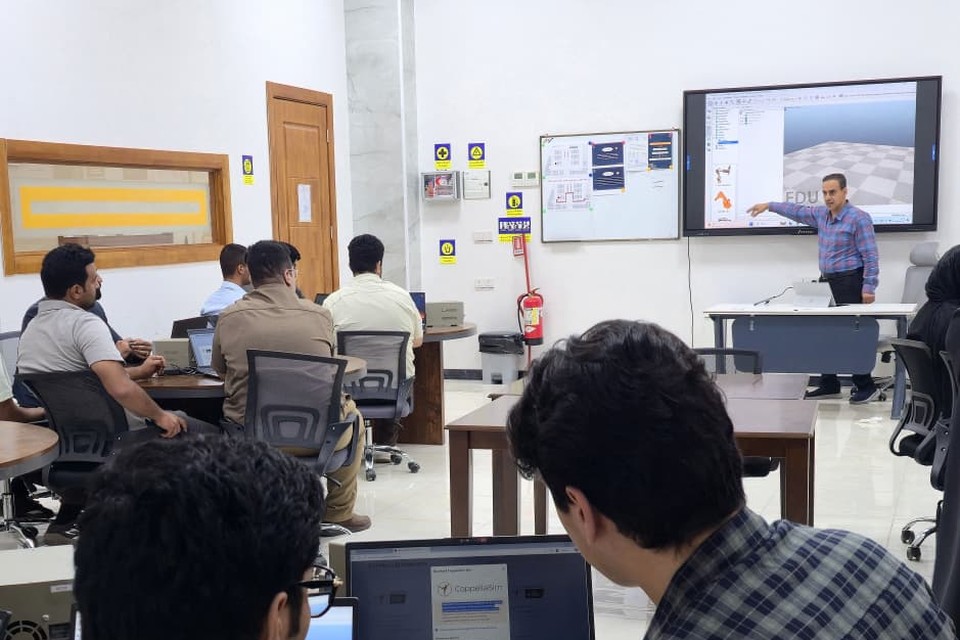
Students of the Department of Robotics and Artificial Intelligence Engineering Technologies at the College of Advanced Technologies, University of Warith Al-Anbiyaa, took part in the second lecture and lab session of Robotics Fundamentals, learning the mechanical structures of robotic arms and then applying them in a simulation environment.
Course
Robotics Fundamentals
Activity
Second lecture and lab session
Department
Robotics and Artificial Intelligence Engineering Technologies
Stage
Second year
Instructor
Dr. Riyadh Nazar Ali Algburi
Venue
Robotics Laboratory
Date
17 October 2026
Activity Highlights
Mechanical structures of robotic arms, joint types and degrees of freedom, and how link arrangement shapes motion and workspace.
End-effector types, defining the Tool Centre Point (TCP), and the difference between accuracy and repeatability.
Installing CoppeliaSim Edu and running first experiments with industrial robotic arms in simulation.
An introduction to forward kinematics (FK) and inverse kinematics (IK) for relating joint variables to tool position.
Key Terms from the Lecture
DoF — Degrees of Freedom
The number of independent motions an arm can perform; more DoF means more flexible reach.
TCP — Tool Centre Point
The reference point at the tool tip that the robot is programmed to bring to the target.
FK — Forward Kinematics
Computing the tool’s position and orientation from known joint angles.
IK — Inverse Kinematics
Computing the joint angles needed to bring the tool to a desired position.
“Simulation lets students try, fail and try again without breaking a real arm. When they see with their own eyes how changing a single joint angle reshapes the whole tool path, kinematics stops being symbols on the board and becomes real understanding.”
— Dr. Riyadh Nazar Ali Algburi, Course Instructor
Combining the lecture with hands-on simulation strengthened students’ grasp of core robotics principles and their skills in observation, analysis and working with simulation environments, paving the way for robot programming, control and sensing.
Explore the Robotics & AI Department →
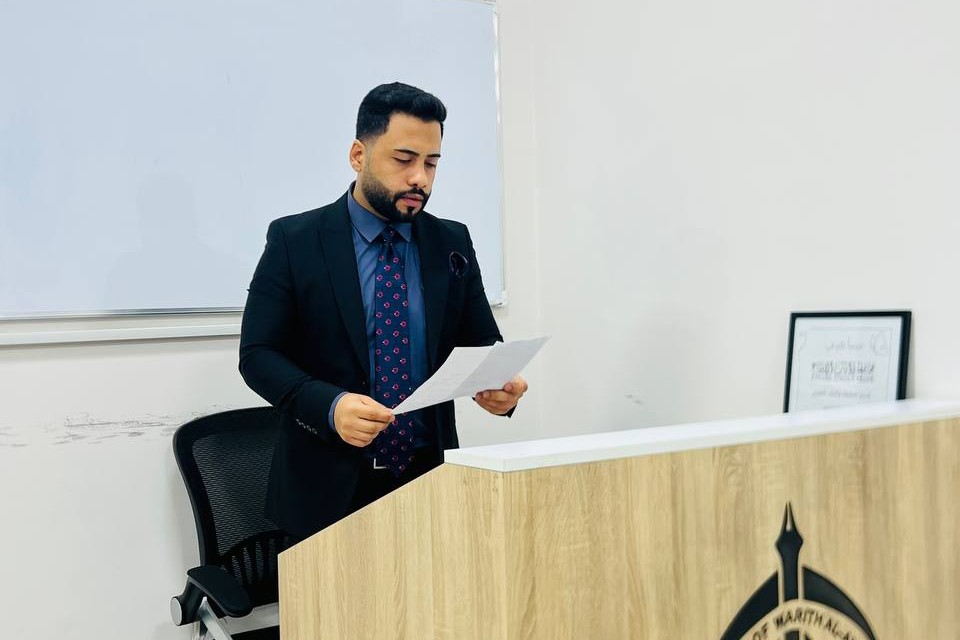
Second-year students of the Department of Radiology and Nuclear Medicine Technologies at the College of Advanced Technologies, University of Warith Al-Anbiyaa, are continuing their lectures in Introduction to Radiography Clinical Education, part of an academic pathway that prepares them for clinical training and professional practice in medical imaging.
Course
Introduction to Radiography Clinical Education
Lecture topic
Clinical Obligations & Student Roles
Department
Radiology and Nuclear Medicine Technologies
Stage
Second year
Instructor
Asst. Lect. Mohammed Al-Mustafa Majid
Venue
Lecture hall
Date
17 October 2026
Activity Highlights
The student’s scope of practice during clinical training and the limits of their responsibilities.
The role of the clinical preceptor in guidance, supervision and assessment.
Recording competencies with integrity: logging on the same day, recording only what was actually performed, and knowing the programme’s minimum numbers.
Protecting patient privacy by keeping identifiers out of personal notes.
“The clinical log is the official memory of a student’s growth; if it isn’t logged, it didn’t happen. That is why we teach our students from day one to record what they actually did, on the same day, with an honesty that protects both the patient and themselves.”
— Asst. Lect. Mohammed Al-Mustafa Majid, Course Instructor
These lectures reflect the college’s commitment to developing students’ scientific and practical skills, deepening their understanding of professional ethics and clinical requirements, and preparing qualified graduates in radiology and nuclear medicine technologies.
Explore the Radiology Department →
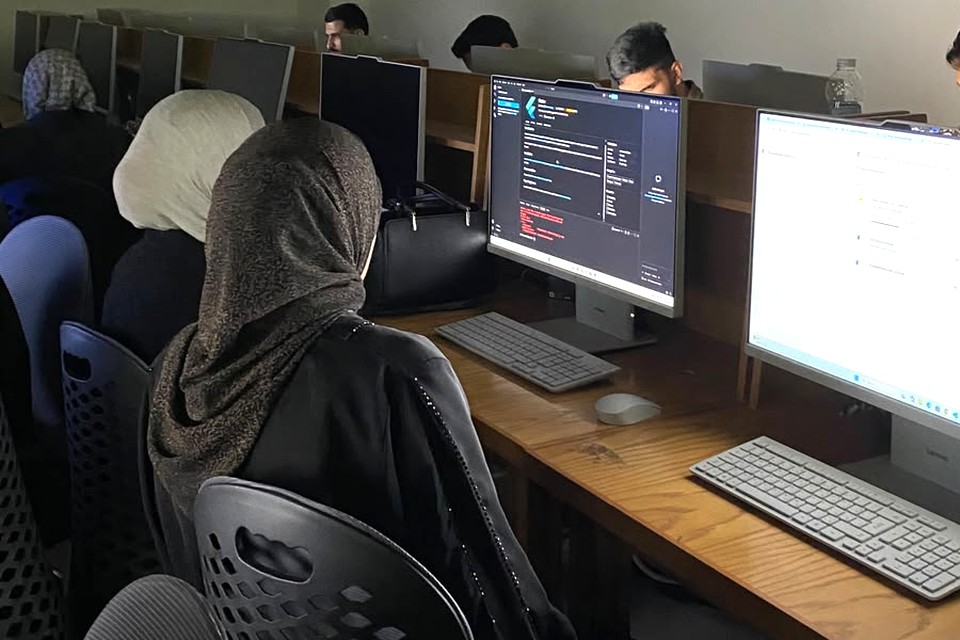
Second-year students of the Department of Smart Digital Health Technologies at the College of Advanced Technologies, University of Warith Al-Anbiyaa, took part in a practical Mobile Software Development lecture in the college's computer laboratory, taking their first steps in building mobile applications with the Flutter framework.
Course
Mobile Software Development
Department
Smart Digital Health Technologies
Stage
Second year
Instructor
Dr. Roaa Majeed Salman
Venue
Computer Laboratory
Date
17 October 2026
Activity Highlights
Setting up the development environment and installing the Flutter SDK on the lab computers.
Creating a new Flutter project and exploring its file structure.
Writing Dart code, running the app, and tracing and fixing errors.
Discussing the role of mobile apps in delivering digital health services.
"We want every student to write their first app with their own hands in the lab. Mobile apps are now a core part of digital health services, and our students need to master building them, not just using them."
— Dr. Roaa Majeed Salman, Course Instructor
This activity reflects the college's commitment to linking theory with practice and preparing its students to develop digital applications that serve the healthcare sector.
Explore the Digital Health Department →

University of Warith Al-Anbiyaa Holds Training Course on Prompt Engineering to Enhance Students' AI Skills
The Deanship of the College of Modern Technologies at the University of Warith Al-Anbiyaa (peace be upon him) held a specialized training course titled "Prompt Engineering in Artificial Intelligence," targeting students from the Departments of Robotics and Artificial Intelligence Engineering and Smart Digital Health Technologies, alongside the participation of students from the Department of Artificial Intelligence Sciences at the College of Computer Science and Information Technology. The course was delivered by Mr. Ahmed Al-Siddiq, who presented specialized training content covering the fundamentals of crafting and directing prompts in a way that achieves the best results when working with artificial intelligence technologies.
This course is part of the College of Modern Technologies' broader efforts to strengthen students' applied skills, focusing on the practical use of artificial intelligence technologies in ways that contribute to developing their academic and professional capabilities, in line with the rapid advancements in this field and preparing them for a future job market increasingly built around these emerging technologies.
The organization of this course reflects the university's commitment to supporting the Sustainable Development Goals, particularly Goal 4 on Quality Education, by enhancing students' technical and knowledge-based skills in ways that raise the quality and efficiency of education. It also aligns with Goal 9 on Industry, Innovation, and Infrastructure by empowering students to apply emerging technologies such as artificial intelligence in their scientific and health-related fields, in addition to contributing to Goal 8 on Decent Work and Economic Growth through preparing capable young talent able to compete in today's job market.

The College of Modern Technologies Actively Participates in the First Warith Exhibition for Creativity and Innovation
The College of Modern Technologies participated in the First Warith Exhibition for Creativity and Innovation, organized by Warith Al-Anbiyaa University – Al-Naqeeb Campus, alongside the College of Dentistry, the College of Pharmacy, and the College of Computer Science and Information Technology.
During the exhibition, the college showcased a number of distinguished student projects in the fields of robotics, smart systems, application software, and modern technological solutions, reflecting an advanced level of scientific and practical skills.
This participation comes as part of the college’s ongoing efforts to support student creativity and develop innovative capabilities, contributing to the preparation of qualified graduates who can keep pace with technological advancements and the demands of the labor market.
تشارك كلية التقنيات الحديثة بنشاط في المعرض الأول لوارث للإبداع والابتكار
شاركت كلية التقنيات الحديثة في المعرض الأول لوارث للإبداع والابتكار، الذي نظمته جامعة وارث الأنبياء – فرع النقيب، إلى جانب كلية طب الأسنان، وكلية الصيدلة، وكلية علوم الحاسوب وتكنولوجيا المعلومات.
خلال المعرض، عرضت الكلية عددًا من المشاريع الطلابية المتميزة في مجالات الروبوتات، والأنظمة الذكية، وبرمجيات التطبيقات، والحلول التكنولوجية الحديثة، ما يعكس مستوى متقدمًا من المهارات العلمية والعملية.
تأتي هذه المشاركة في إطار جهود الكلية المستمرة لدعم إبداع الطلاب وتطوير القدرات الابتكارية، والمساهمة في إعداد خريجين مؤهلين قادرين على مواكبة التطورات التكنولوجية ومتطلبات سوق العمل.
