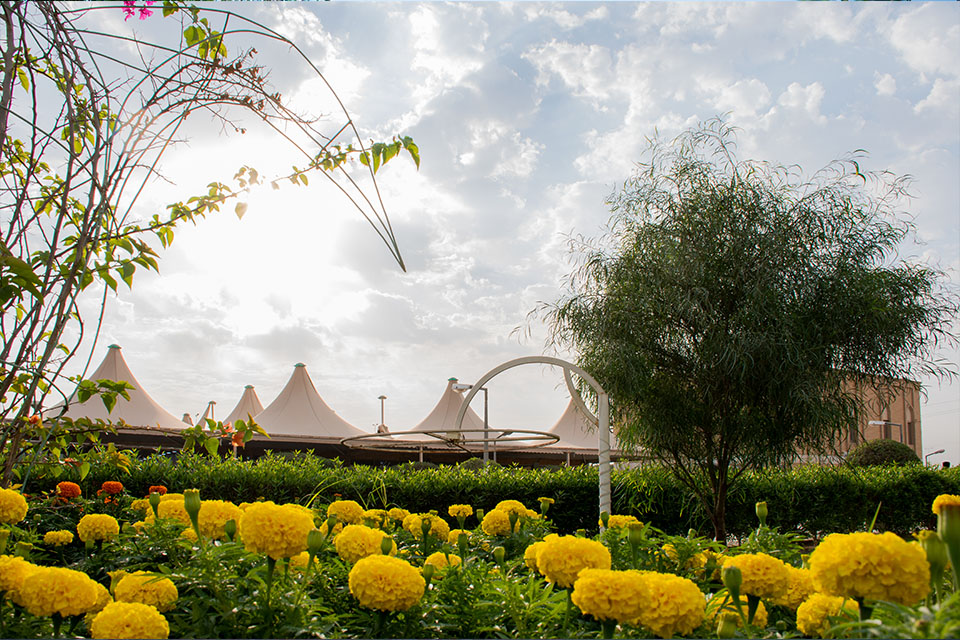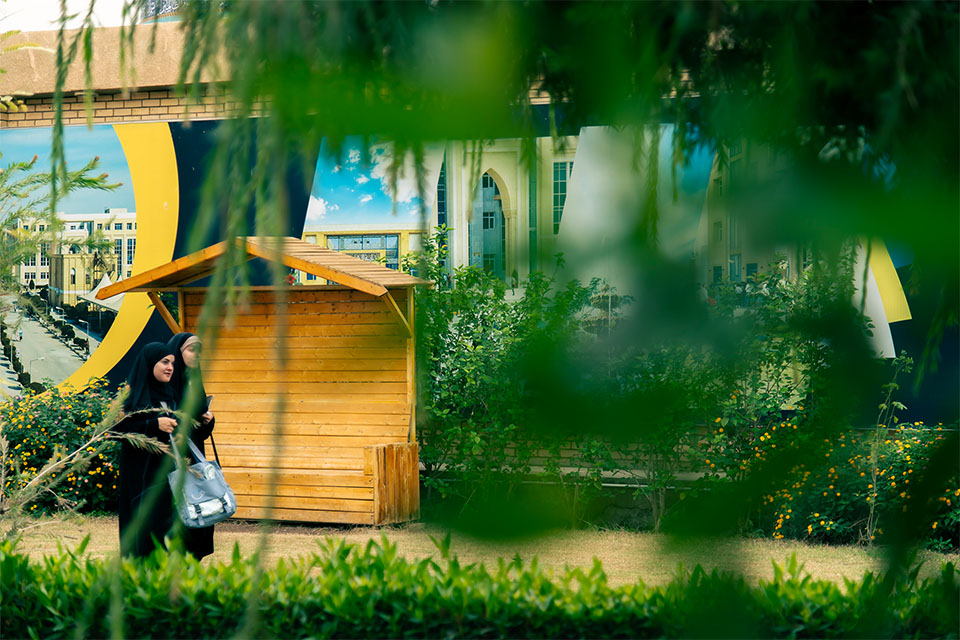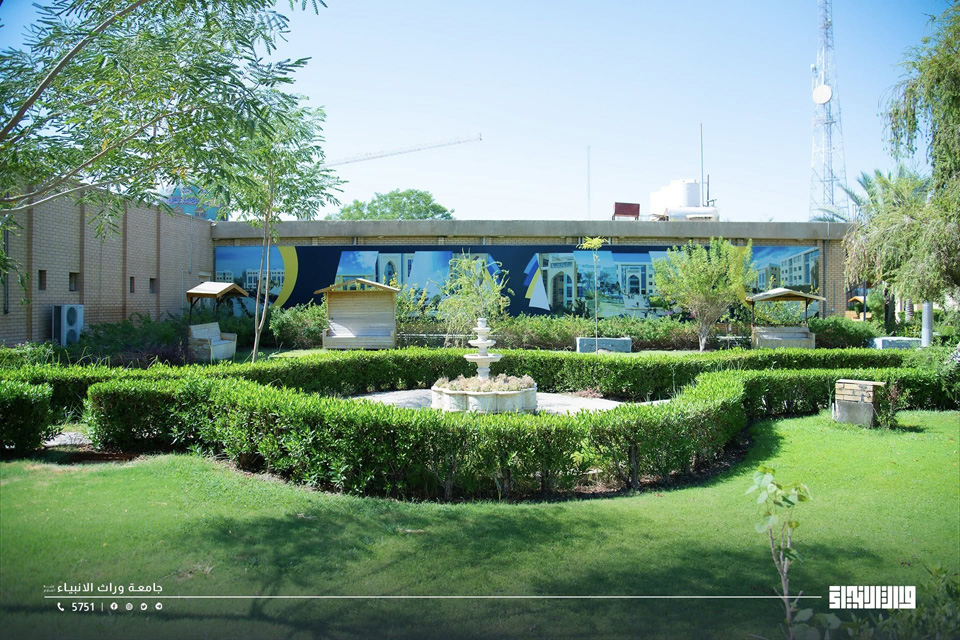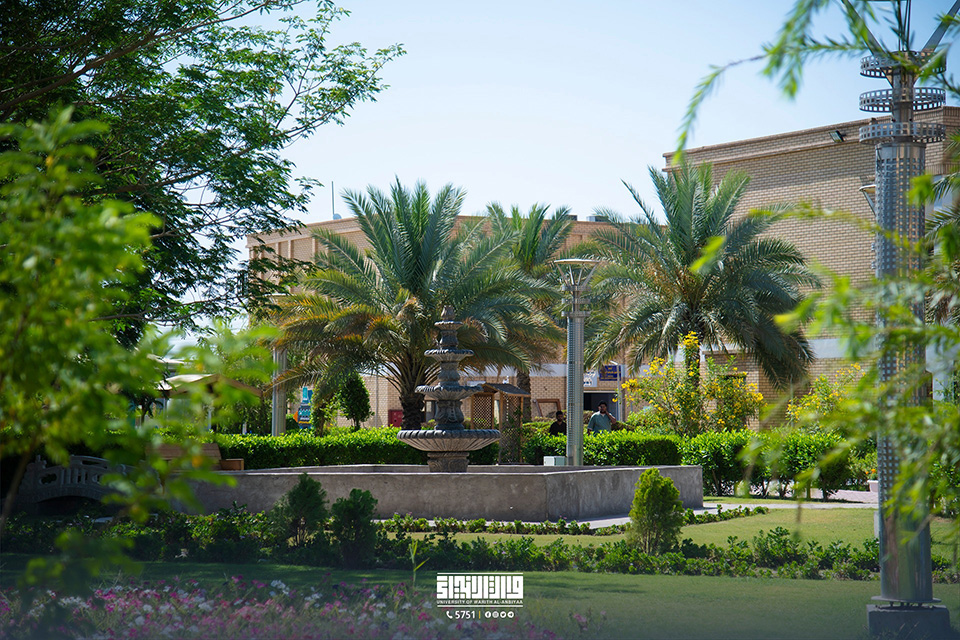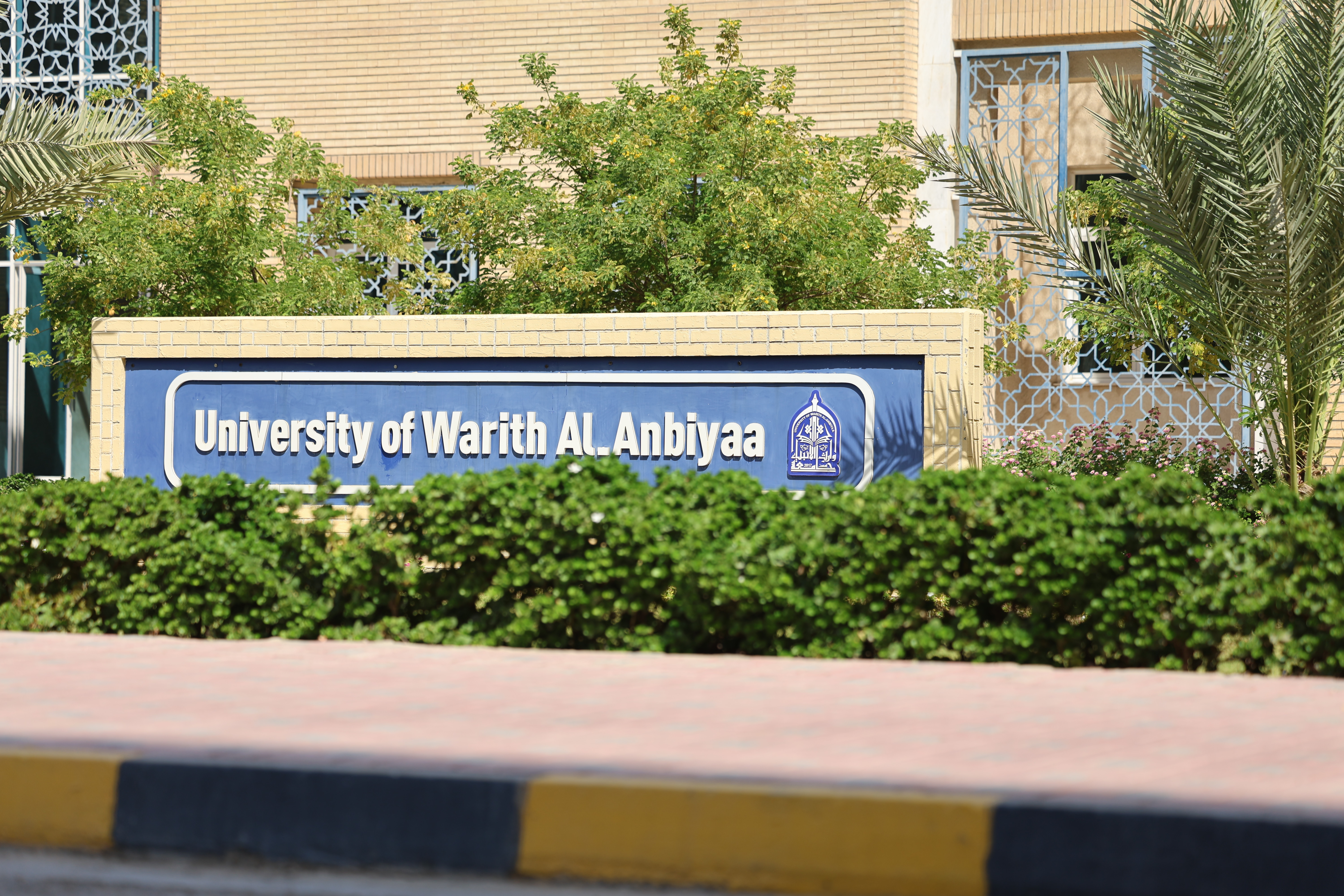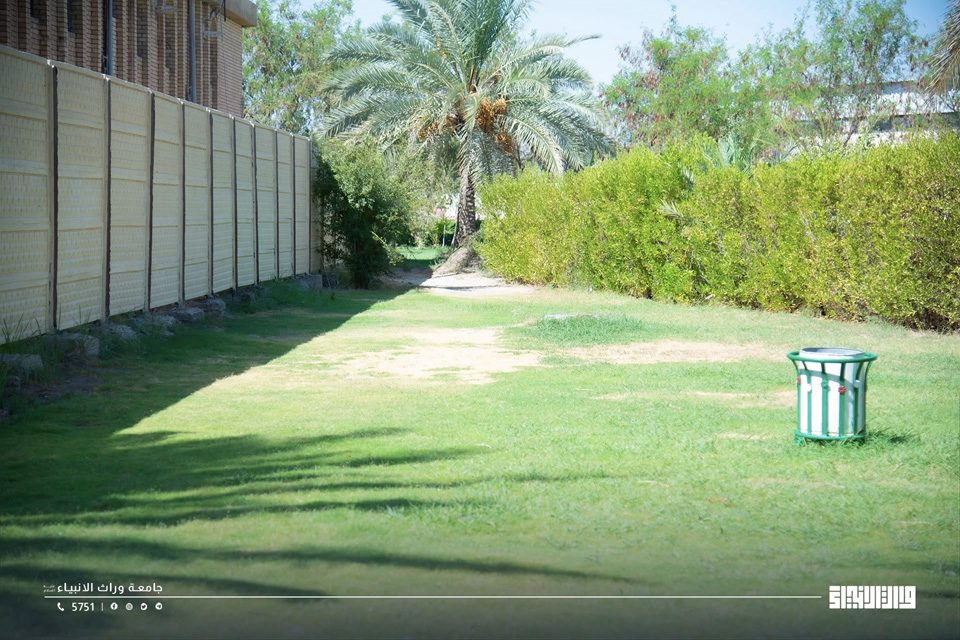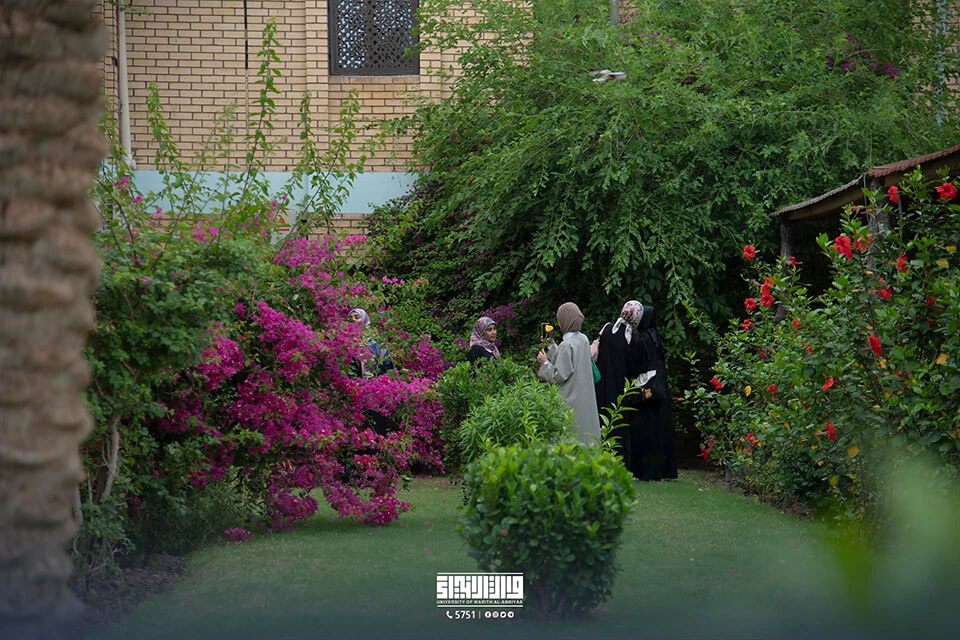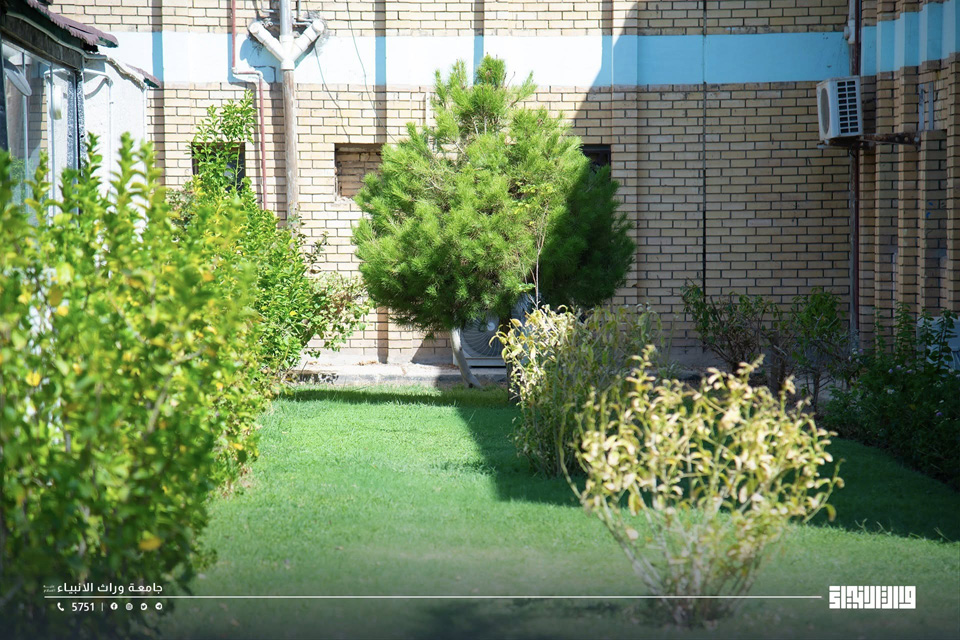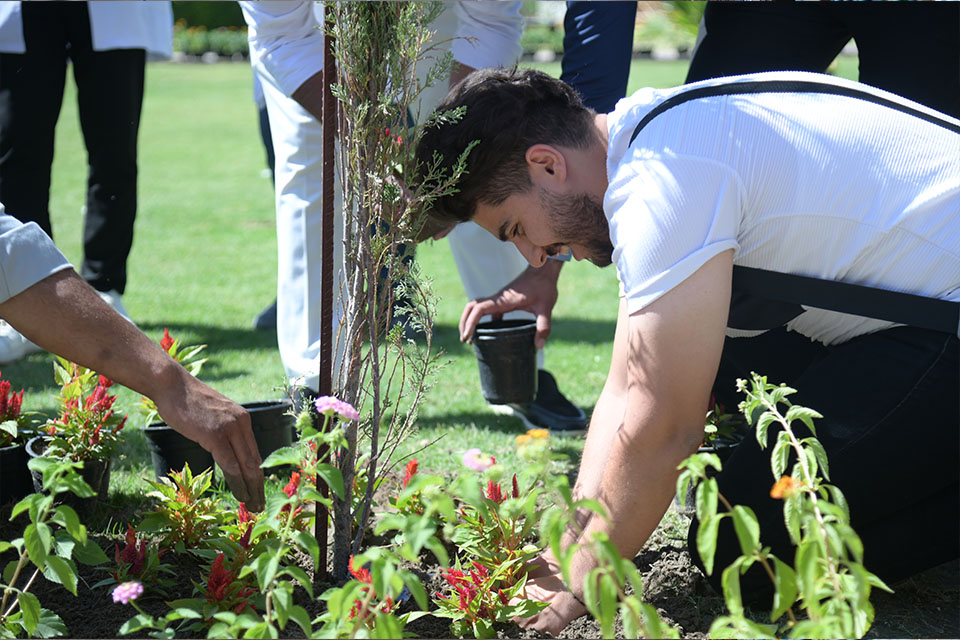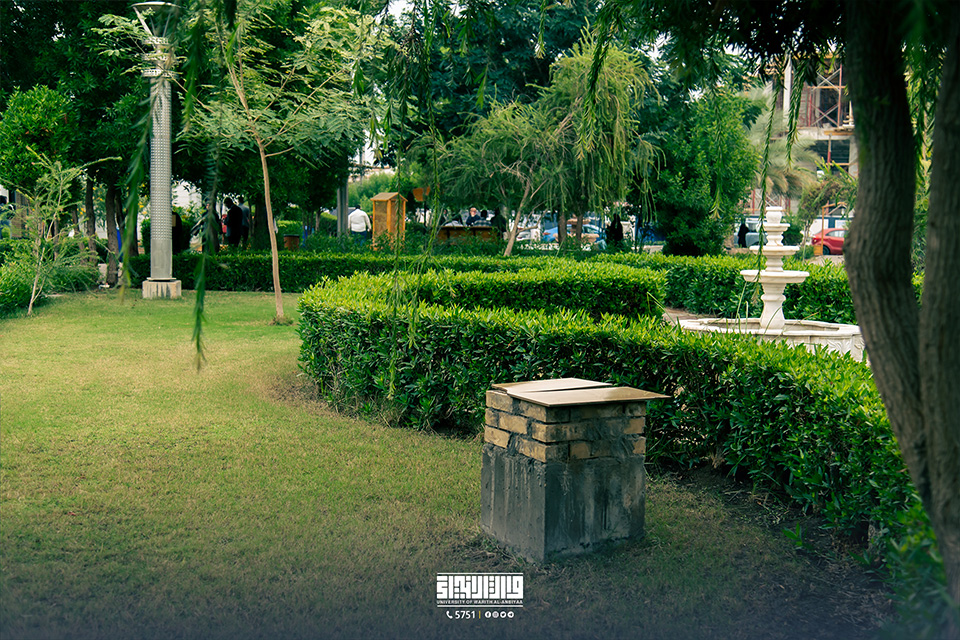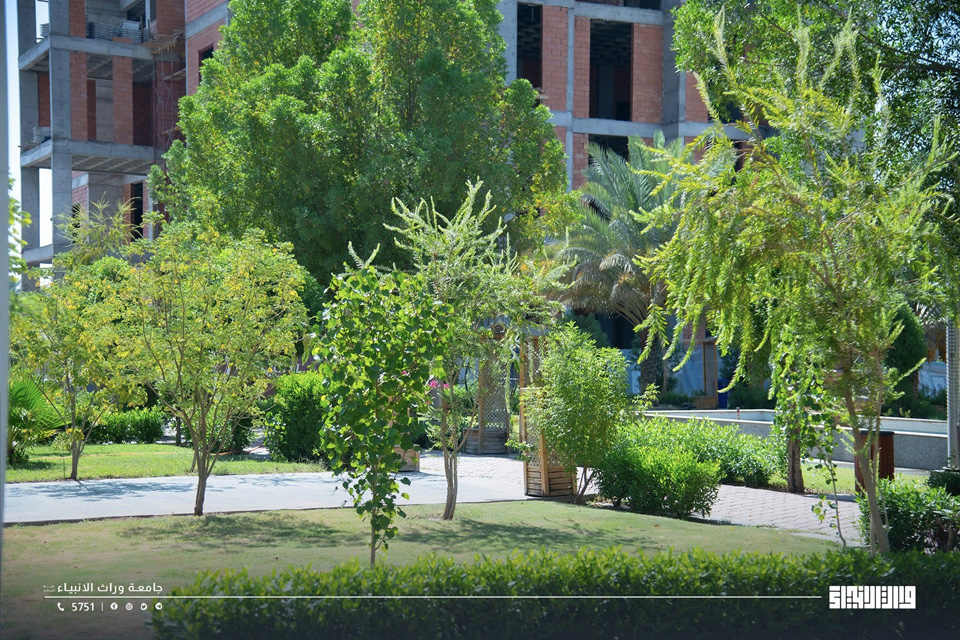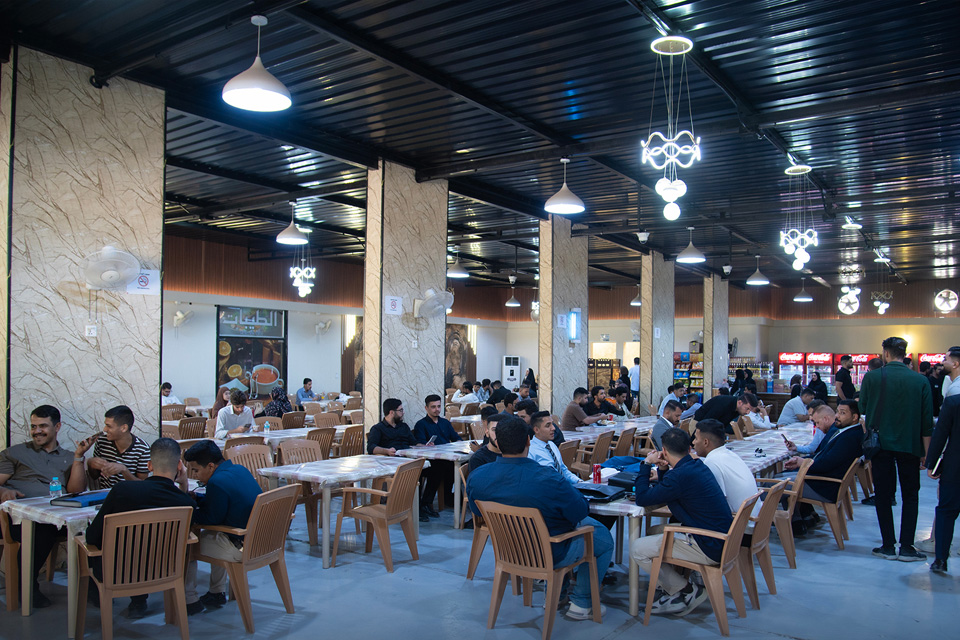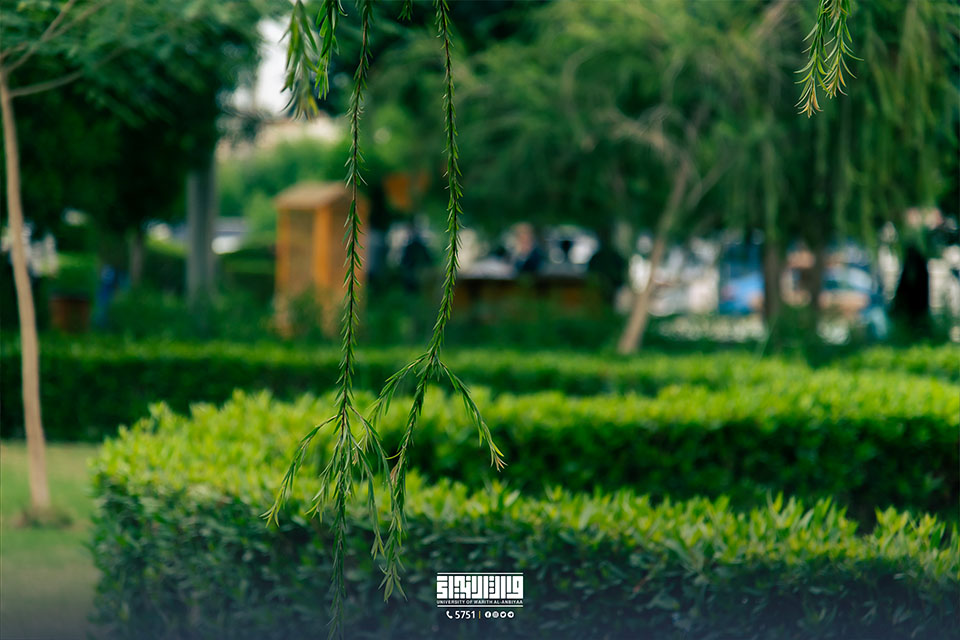


As part of its continuous commitment to developing a sustainable and environmentally responsible campus, University of Warith Al-Anbyiaa has devoted significant attention to expanding and maintaining the green spaces and landscaped gardens distributed throughout the university campus. These areas are carefully designed to enhance environmental quality, improve the campus microclimate, and create a balanced educational environment that harmoniously combines natural beauty with academic life.
The university campus includes extensive planted and landscaped vegetation areas integrated between academic buildings, walkways, and public gathering spaces. The total campus area is 114,210 m², including 35,320 m² of planted vegetation, representing approximately 31% of the campus area, as well as 9,207 m² of forest vegetation used for research, teaching, and community engagement purposes, representing approximately 8.06% of the total campus area. These green areas contribute to improving air quality, reducing heat accumulation, and creating a healthier and more visually appealing campus environment.
The university’s green spaces contribute to SDG 3 (Good Health and Well-Being) by providing healthy outdoor environments that support students’ psychological comfort, physical well-being, and social interaction. Gardens, shaded walkways, and recreational seating areas offer a calm and refreshing atmosphere that enhances the overall university experience.
These landscaping initiatives also support SDG 11 (Sustainable Cities and Communities) through the creation of an organised, sustainable, and environmentally conscious campus environment. The university continues to increase vegetation coverage, improve green infrastructure, and maintain aesthetically integrated outdoor spaces that strengthen environmental identity and urban sustainability.
In addition, the university’s planting and landscaping strategies contribute to SDG 13 (Climate Action) by helping reduce heat accumulation, improve air quality, and support carbon reduction efforts through increased vegetation and natural shading across the campus.
The use of drought-resistant plants and sustainable landscape maintenance practices further reflects the university’s commitment to SDG 15 (Life on Land) by supporting biodiversity, protecting natural resources, and promoting environmentally sustainable land use practices. The university’s forest vegetation areas also support research, teaching, and community engagement activities while contributing to ecological balance and biodiversity conservation on campus.
Through these initiatives, the university’s gardens and green spaces have become an essential component of its vision to establish a modern, sustainable, and student-centred educational environment that integrates environmental stewardship with academic excellence.