





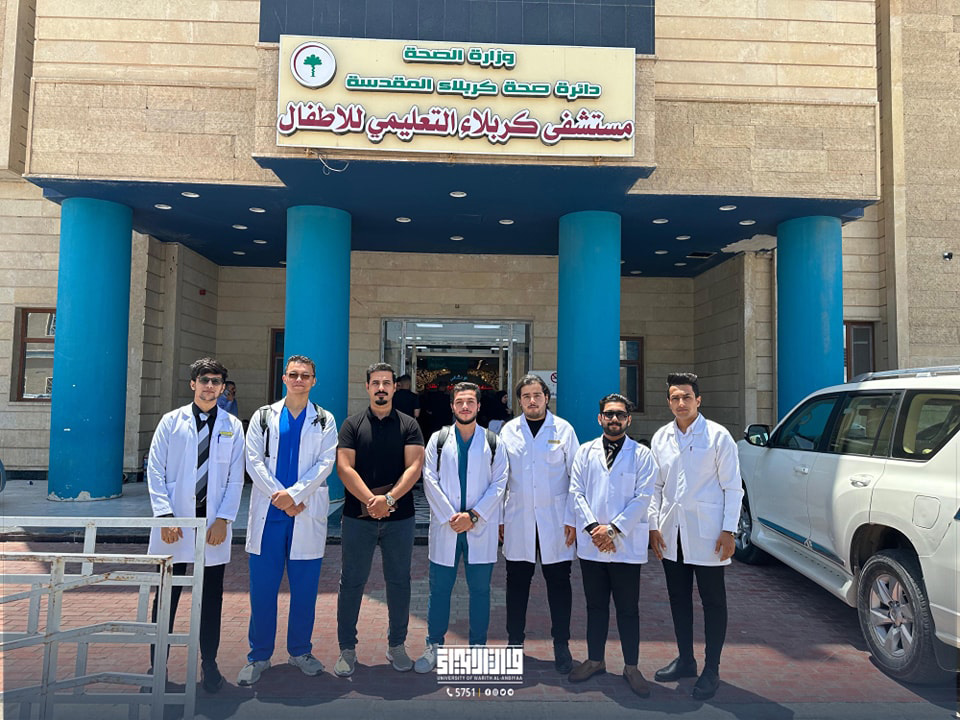
Ongoing Summer Training for International Students Led by Nursing Professors
Summer training lessons for overseas students continue under the supervision of professors from the College of Nursing at the University of Warith Al-Anbiyaa (PBUH), with participation from nursing students.
2024/07/26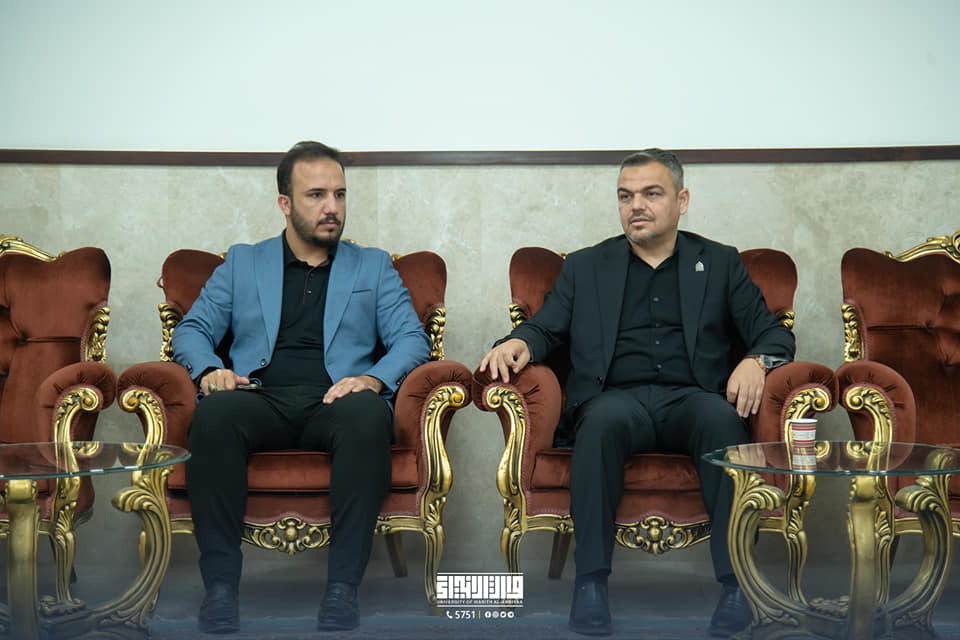
Vice President for Scientific Affairs and Quality Assurance Department Discuss Education Quality
Professor Dr. Waqid Al-Mousawi, Vice-President for Scientific Affairs at the University of Warith Al-Anbiyaa (PBUH), met with the Quality Assurance and University Performance Department, which included quality representatives from the university's colleges and departments. The meeting addressed critical problems such as performance evaluation, programme accreditation, Iraqi national rankings, and institutional performance evaluation.
Assistant Lecturer Hussein Al-Ghanmi, Director of the Quality Assurance Department, delivered a comprehensive presentation on the department's current state of work, emphasising the efforts made by the quality team in colleges and departments to face the current challenges.
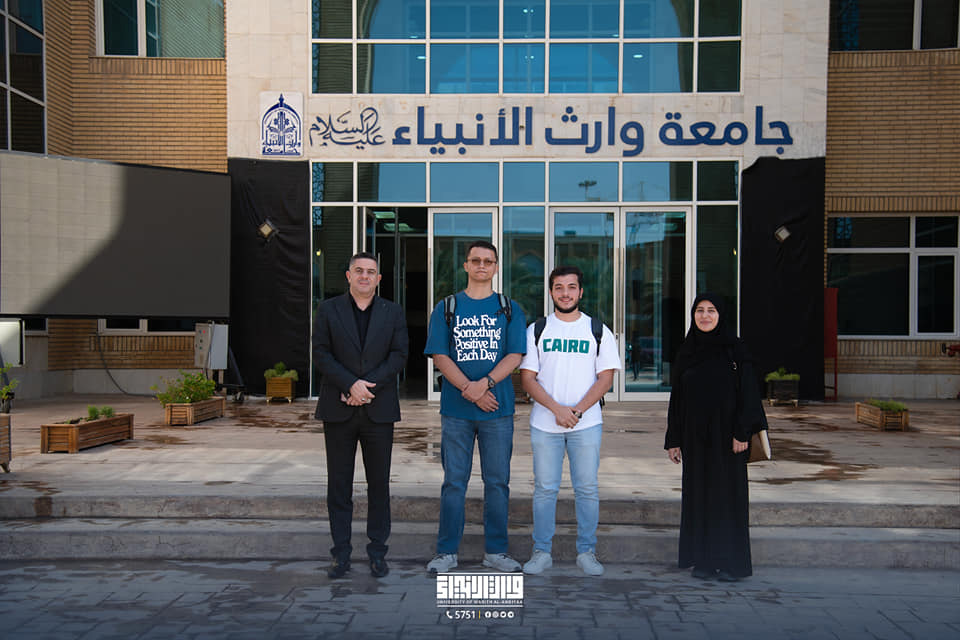
Dean of College of Nursing Leads Field Trip for Visiting Students
The Dean of the College of Nursing, Professor Dr. Murtada Al-Jubouri, accompanied the visiting students on a field trip of the College of Nursing at the University of Warith Al-Anbiyaa (PBUH) in order to begin the summer training programme.
2024/07/26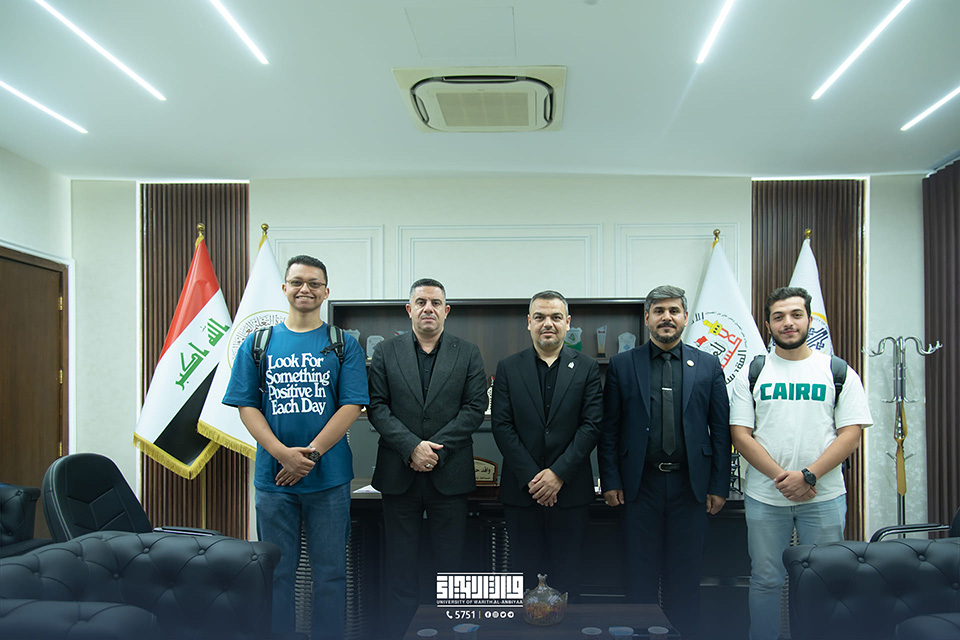
Warith Al-Anbiyaa Hosts Egyptian Students for Summer Training
The University of Warith Al-Anbiyaa (PBUH) received a delegation of Egyptian students as part of the Student Exchange Programme for summer training. The Vice-President of the University for Scientific Affairs, Professor Dr. Waqid Al-Moussawi, and the Dean of the College of Nursing, Professor Dr. Murtada Al-Jubouri, met with the international students to discuss the training programmes that were prepared in cooperation between the Office of the Vice-President of the University and the College of Nursing.
2024/07/26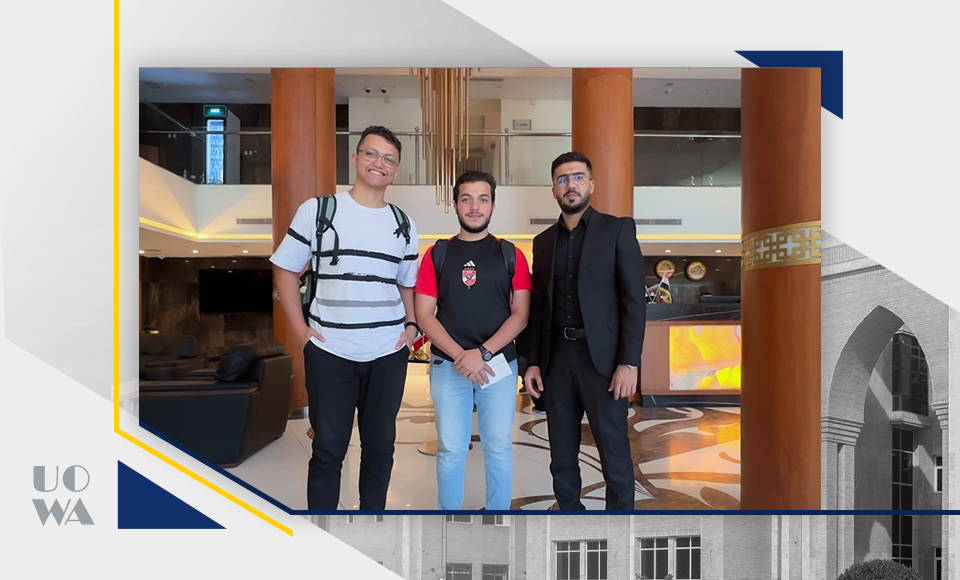
Sheikh Al-Karbalai Urges Attention to Students in Summer Exchange Programme
His Eminence Sheikh Abdul Mahdi Al-Karbalai, the legal custodian of the Holy Shrine of Imam Hussein (PBUH), has requested that students sent to the University of Warith Al-Anbiyaa (PBUH) for summer training as part of the Student Exchange Programme receive special attention.
The Department of Media and Public Relations received students coming from the Arab Republic of Egypt for summer training at the College of Nursing. The university president instructed to provide them with all means of comfort and to provide a comprehensive training programme that includes field trips, training seminars, and tours.
It is also noteworthy that a number of students from the University of Warith Al-Anbiyaa were sent for summer training for a month at the University of Nizwa in the Sultanate of Oman.
The Minister Commends Universities Implementing Bologna Procedures
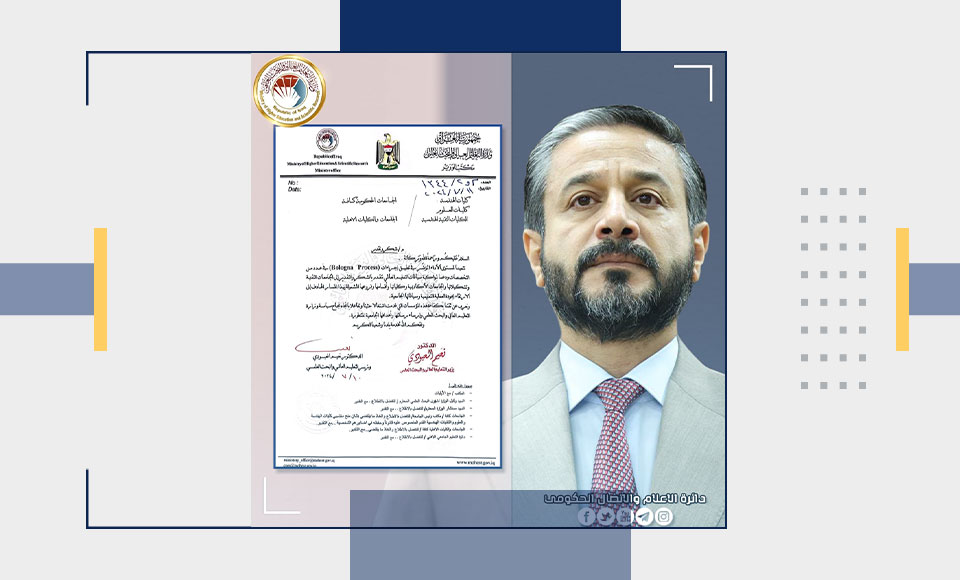
The universities and organisations that put the Bologna Process into practice received a letter of praise and acknowledgment from Dr. Naeem Al-Aboudi, Minister of Higher Education and Scientific Research.
In the text of the letter, the Minister praised the efforts of technical and academic universities, as well as their colleges and departments, in promoting the calibre of the educational process and expressed his gratitude for their extraordinary performance in carrying out this process. The Minister reiterated his faith in these organisations' ability to carry out the academic mission of the Ministry of Higher Education and Scientific Research more effectively and to meet its objectives.
Warith Al-Anbiyaa Council Discusses Key Issues as Academic Year Ends
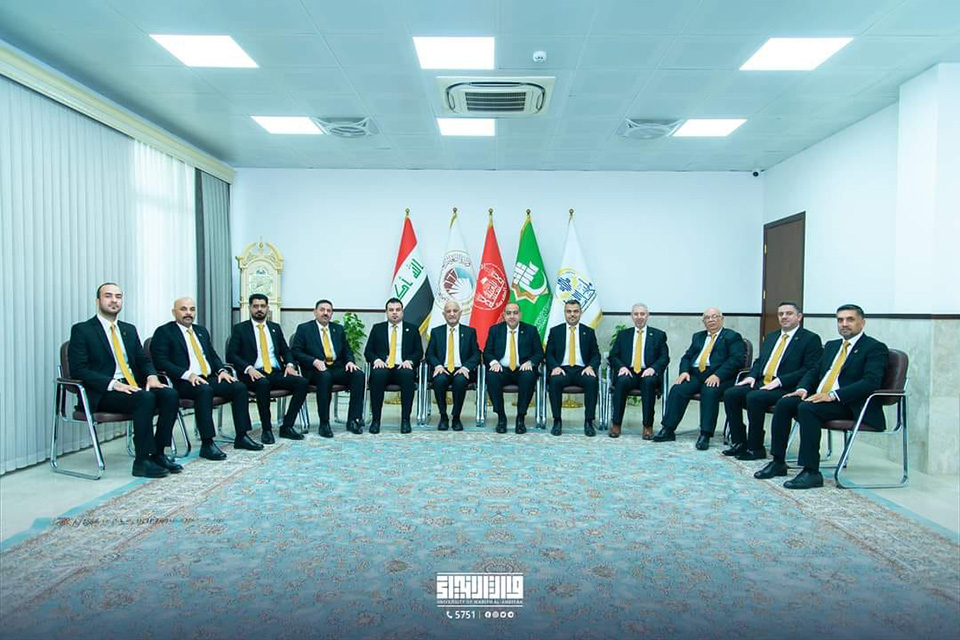
Under the direction of Professor Dr. Ibrahim Al-Hayawi, the Council of the University of Warith Al-Anbiyaa (PBUH) convened its regular session. The Vice Presidents for Administrative and Scientific Affairs as well as the College deans were present. As the end of the academic year draws near, a number of significant decisions that will benefit the university and its beloved students were deliberated during the meeting.
2024/07/21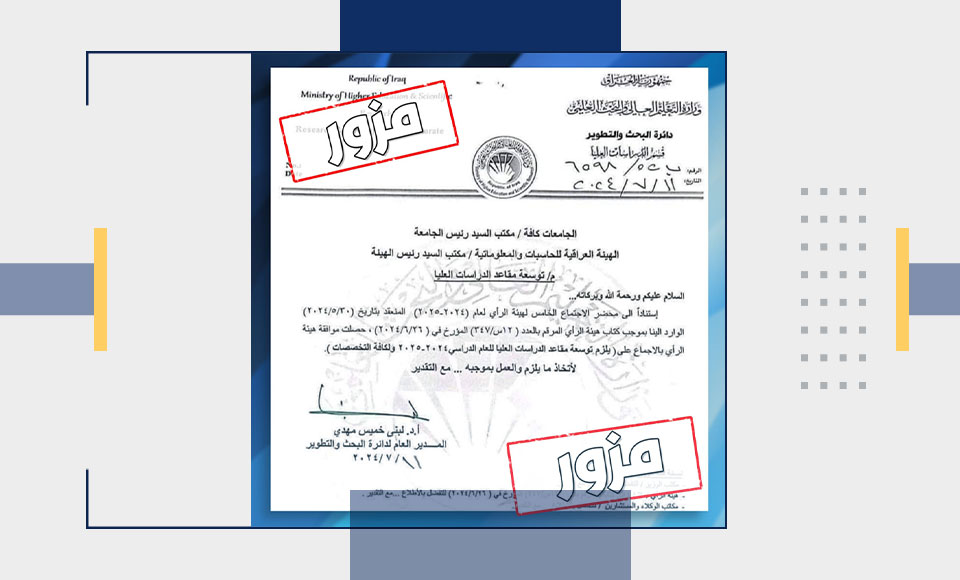
Ministry Warns of Forged Book on Expanding Postgraduate Admissions
The Ministry of Higher Education and Scientific Research issued a warning over the dissemination of a fake book that purported to increase postgraduate study admissions.
The ministry emphasised the significance of relying on official sources to prevent confusion. Furthermore, the ministry urged all educational institutions and students to avoid being misled by this false information.
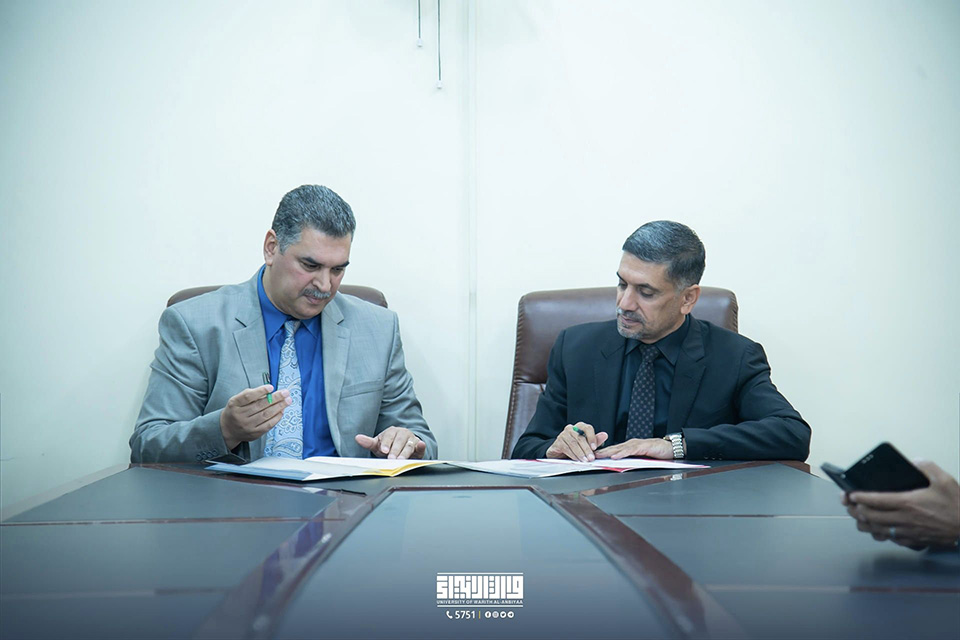
Engineering College and University of Technology Forge Agreement to Enhance Education System
In an effort to improve the quality of education in the Holy Shrine of Imam Hussein (PBUH) educational institutions, the University of Warith Al-Anbiyaa (PBUH) College of Engineering signed a scientific agreement with the University of Technology to implement the new curriculum.
Assistant Professor Dr. Hussein Hadi Al-Awadi, Dean of the College of Engineering, clarified that this action is being taken in response to the Ministry of Higher Education and Scientific Research's orders for the initiation of scientific twinning between public and private colleges.
During the visit, the college delegation met with the Head of the Mechanics Department at the University of Technology, and a joint cooperation mechanism was agreed upon to strengthen scientific and cultural connections.
Al-Awadi emphasised that the agreement covers a number of significant areas, including collaboration regarding the "new education system" associated with the Bologna process and the sharing of administrative and scientific knowledge between the faculty members of the two universities. It also includes improving student events and activities as well as creating programmes, workshops, and conferences. Supporting scientific advancements and improving the scientific method are the goals of this partnership for both institutions.
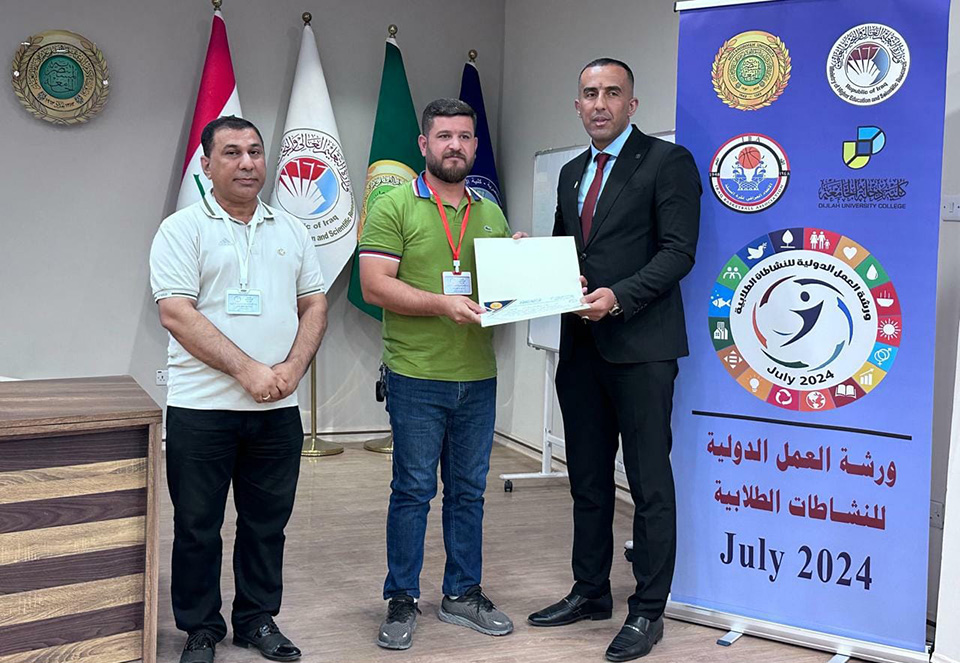
Warith Al-Anbiyaa Joins International Workshop on Student Activities
In the international workshop titled "The Joint Strategic Role of University Student Activities and Sports Federations in Organising International Championships and Achieving the Social and Economic Goals of Sustainable Development," lecturer Dr. Hammam Al-Khafaji, head of the department of student activities at the University of Warith Al-Anbiyaa (PBUH), represented the university.
Several colleges and universities, both public and private, attended the workshop at Al-Mustansiriya University. The event emphasises how crucial athletics and student involvement are to advancing social objectives and sustainable development.
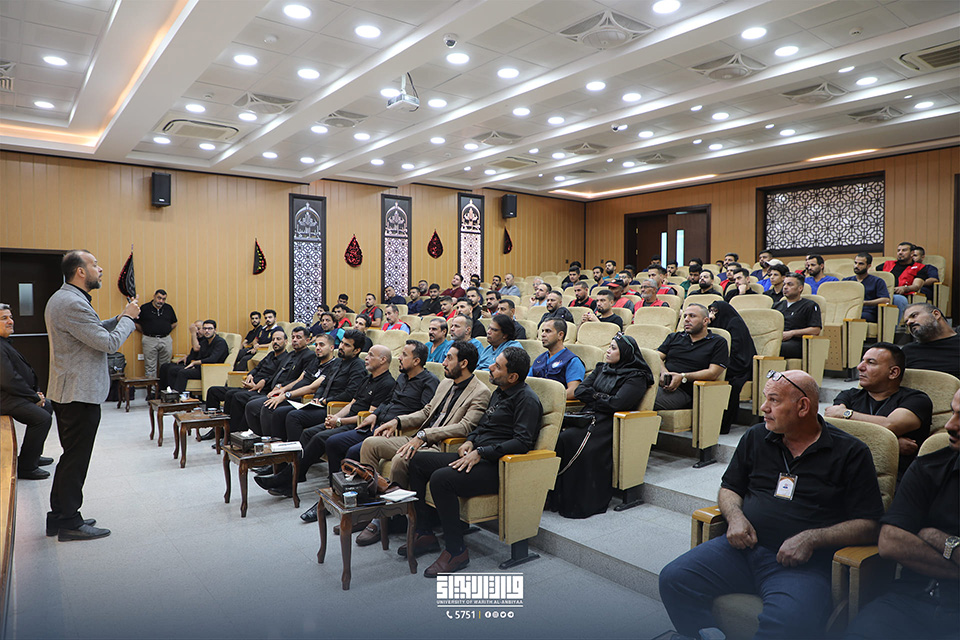
Advanced First Aid Workshop at Warith Al-Anbiyaa
In collaboration with the Regional Centre for Emergency Medicine, the College of Medicine at the University of Warith Al-Anbiyaa (PBUH) arranged a training workshop on advanced first aid (BLS) at the College laboratories. The event was witnessed by the President of the University, Dr. Ibrahim Al-Hayawi, the Dean of the College of Medicine, Dr. Ali Abd Saadoun Al-Ghazi, and the Director of the Centre for Emergency Medicine, Dr. Fadel Okla Al-Rubaie.
Representatives from the medical detachments at the Holy Shrines of Imam Hussein and Abbas (PBUT), the Middle Euphrates governorates, and the Iraqi Ministry of Health were present at the workshop. The University is committed to improving health competence in society, and this workshop seeks to train health and medical workers on crowd medicine procedures and treating mass casualties during million-visits.
This visit is part of the university's efforts to make sure the examination procedure functions properly and efficiently. The university extends its best wishes for exam success to each and every one of the dear students.
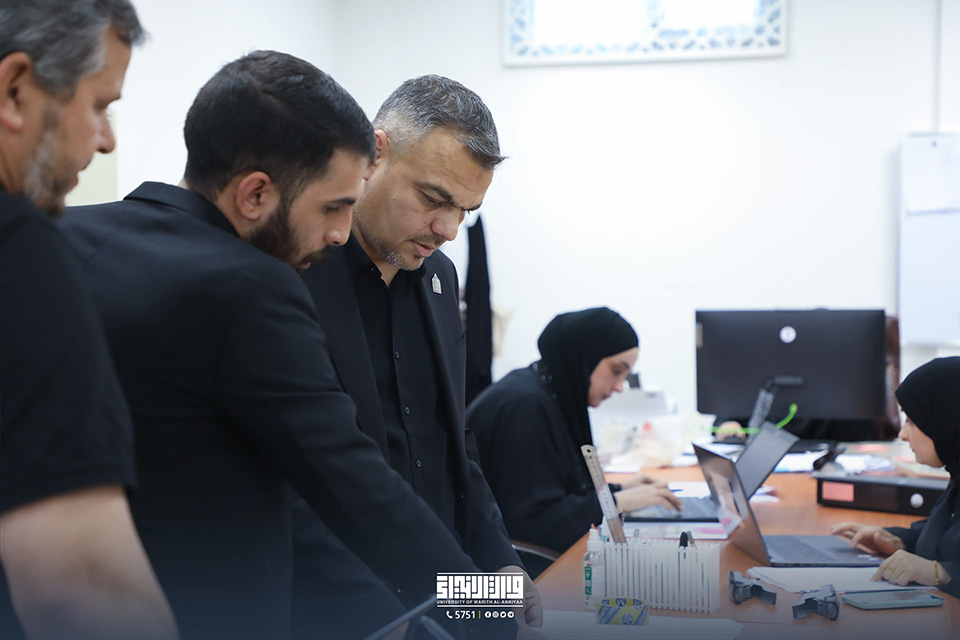
Vice President Inspects Exam Progress
Professor Dr. Waqid Al-Moussawi, Vice President for Scientific Affairs at the University of Warith Al-Anbiyaa (PBUH), conducted an inspection tour to review the examination committee at the College of Medicine, in addition to the final exams for the first-year students at the College of Media.
2024/07/21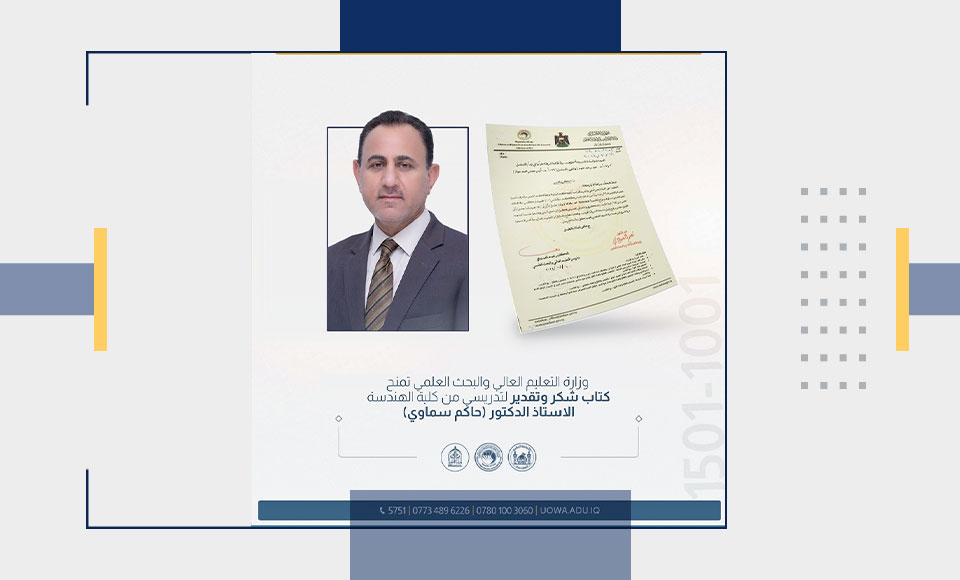
Minister of Higher Education Commends Instructor at Warith Al-Anbiyaa for Academic Achievements
As part of his appreciation for the academic efforts, His Excellency the Minister of Higher Education and Scientific Research, Dr. Naeem Al-Aboudi, granted a letter of recognition and appreciation to Professor Dr. Hakim Samawi, a lecturer at the College of Engineering at the University of Warith Al-Anbiyaa (PBUH).
This recognition was given in recognition of his significant contributions to the scientific process, since he was able to publish more than ten research papers in major scientific publications through the Web of Science portal. This achievement demonstrates the university's dedication to advancing scientific research and higher education in the country.
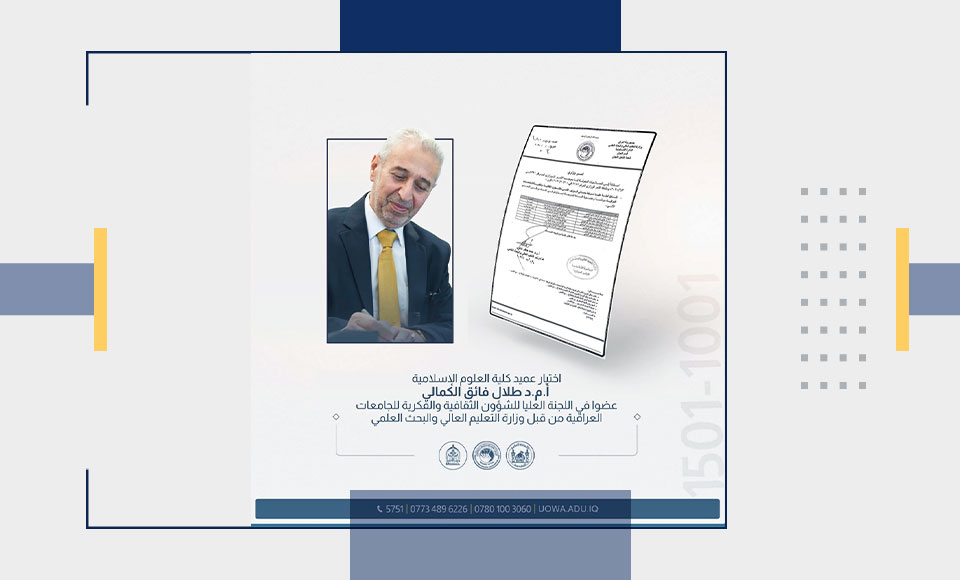
Islamic Sciences Dean Joins Supreme Ministerial Cultural Affairs Committee
Assistant Professor Dr. Talal Faiq Al-Kamali, Dean of the College of Islamic Sciences at the University of Warith Al-Anbiyaa (PBUH), has been appointed to the Supreme Ministerial Committee on "Cultural and Intellectual Affairs of Universities."
This decision was made in acknowledgement of his scientific and intellectual abilities, as well as his significant involvement in spreading ideas and cultural practices in educational institutions. This accomplishment demonstrates significant faith in Al-Kamali's ability and adds to the growth of the cultural and intellectual landscape in Iraqi universities.
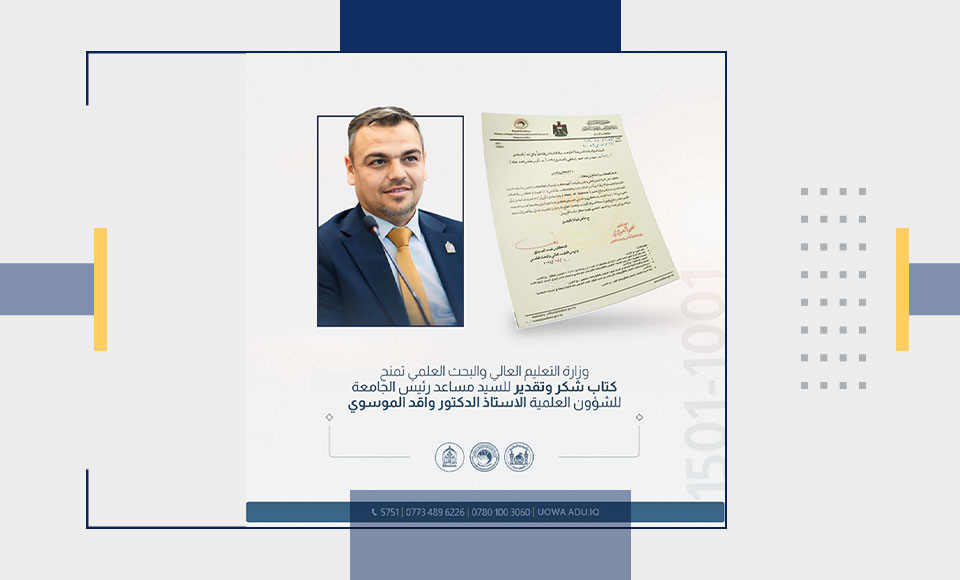
Minister of Education Commends Vice President for Scientific Affairs
Professor Dr. Waqid Al-Moussawi, Vice President for Scientific Affairs at the University of Warith Al-Anbiyaa (PBUH), received a letter of recognition and appreciation from His Excellency, Minister of Higher Education and Scientific Research, Dr. Naeem Al-Aboudi, as a gesture of appreciation for his academic efforts.
Al-Moussawi's exceptional contributions to the advancement of scientific research were acknowledged with this award, as evidenced by the eighteen research papers he published in esteemed publications included in the Web of Science database. This accomplishment is a testament to the university's dedication to advancing scientific research and the educational process, both of which help raise the bar for higher education in the nation.
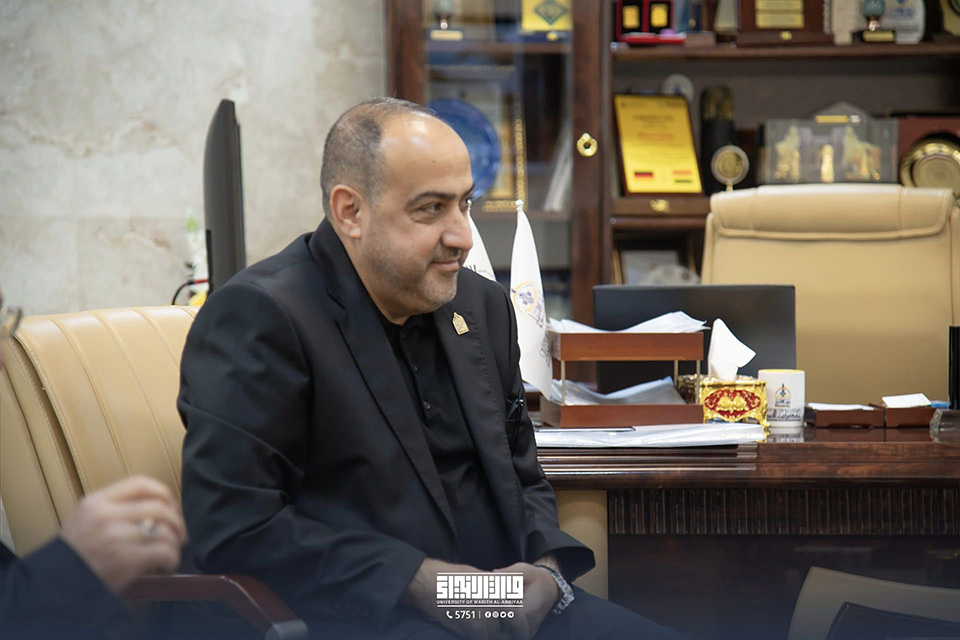
Warith Al-Anbiyaa Presidency Welcomes Karbala Center Delegation
The Karbala Centre for Studies and Research at the Holy Shrine of Imam Hussein sent a delegation, which was met in an official meeting by Professor Dr. Ibrahim Al-Hayawi, President of the University of Warith Al-Anbiyaa (PBUH), and Professor Dr. Waqid Al-Moussawi, Vice President for Scientific Affairs.
The two sides hope to broaden their partnership's scope and improve scientific cooperation with this visit. The university is also expected to organise research sessions for the upcoming Eighth International Scientific Conference of the Arba'een Visit, which is expected to draw notable local and international participants. The conference is set to take place at the end of August.
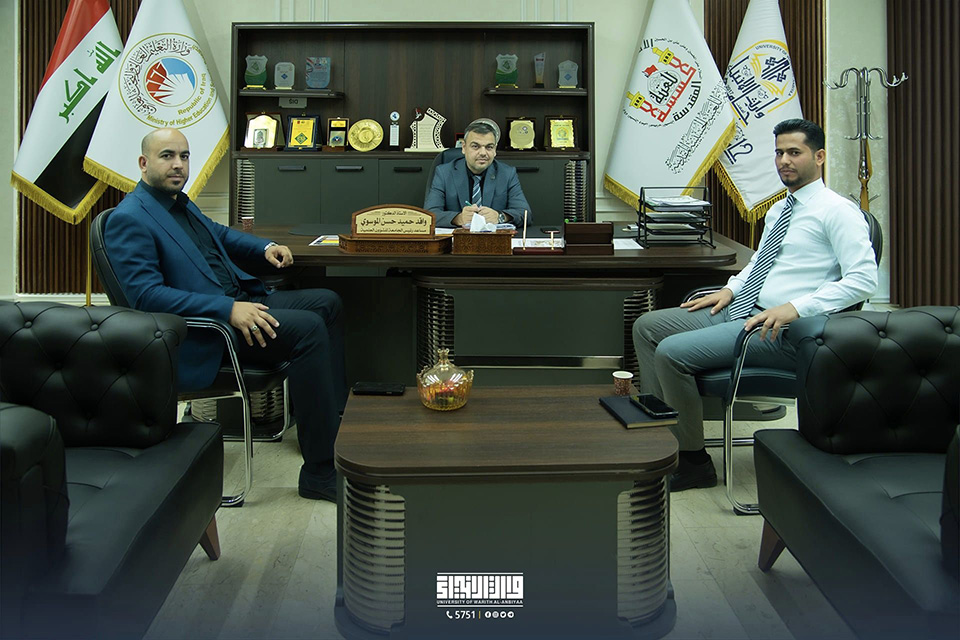
Scientific Cooperation to Enhance Continuous Education
Professor Dr. Waqed Al-Moussawi, Vice President for Scientific Affairs at the University of Warith Al-Anbiyaa, welcomed Assistant Professor Ahmed Qasim Muhammad, representative of Al-Muthanna University and Director of the Continuous Education Centre. They met to discuss advancements at the Continuous Education Centre of the University of Warith Al-Anbiyaa (PBUH).
The university's Centre for Continuous Education stands out for its digital transformation and technological advancements, positioning it on par with the education centres of esteemed international universities.
Following the presentation of a package of cutting-edge scientific and educational accomplishments by Dr. Haider Al-Ghanimi, Director of the Centre of Continuous Education at the University of Warith Al-Anbiyaa (PBUH), Dr. Al-Moussawi directed strengthening scientific cooperation with the Centre for Continuous Education at Al-Muthanna University. Workshops, seminars, and specialised courses in a range of subjects are included in this package.
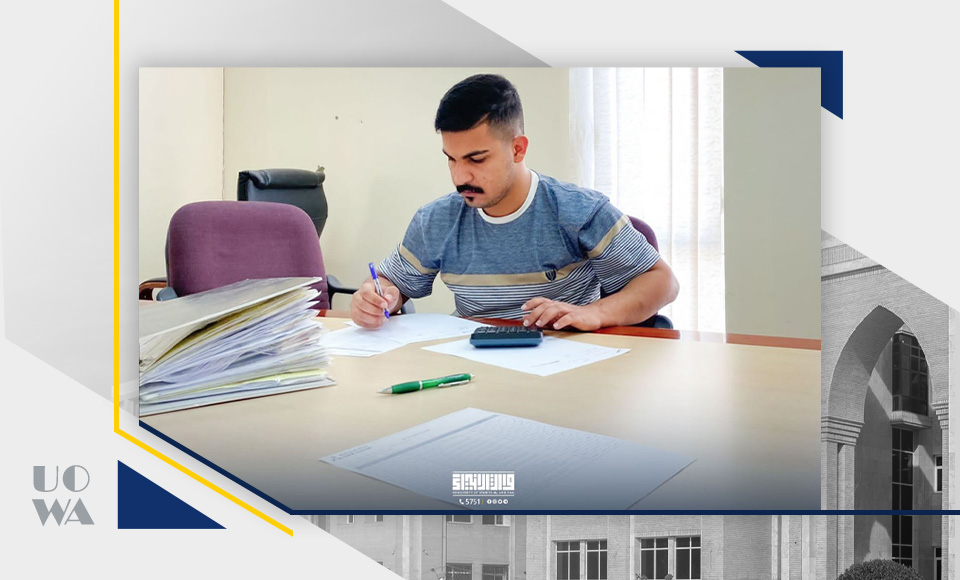
Warith Al-Anbiyaa Students Start Summer Training at Nizwa University
The student delegation from the University of Warith Al-Anbiyaa (PBUH) continues its summer training programme at the University of Nizwa in the Sultanate of Oman. The delegation consists of students from the departments of Civil Engineering, Business Administration, and Accounting, where each student begins his instruction based on his specialisation.
This training programme seeks to improve students' scientific knowledge and practical experience while also helping them develop excellent communication skills.
This programme is a component of the university's endeavours to offer exceptional educational experiences to scholars from diverse Arab and international nations.
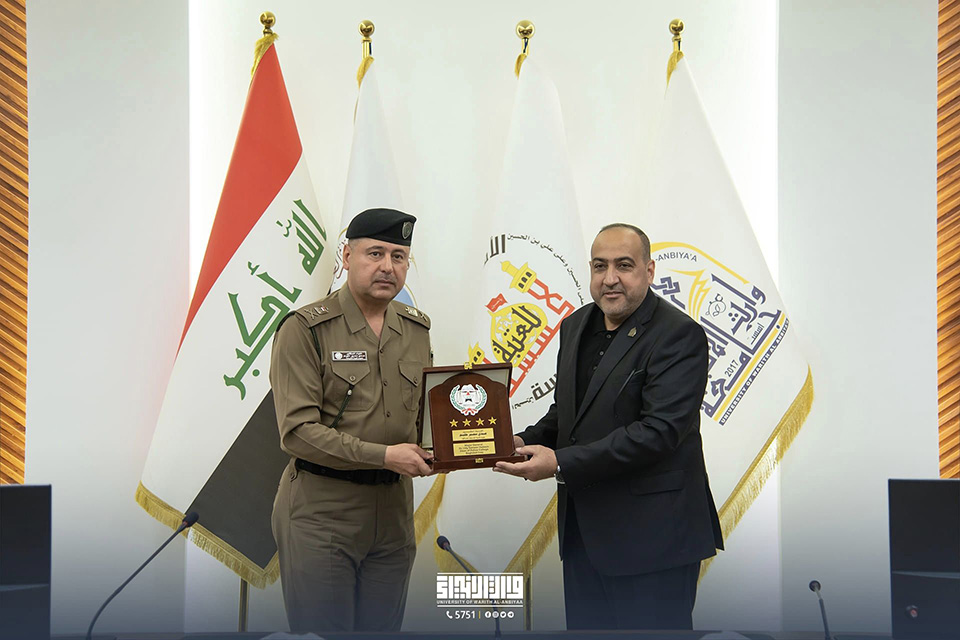
Cooperation Agreement between College of Law at Warith Al-Anbiyaa and College of Police
The College of Law and Political Science at the University of Warith Al-Anbiyaa (PBUH) has signed a memorandum of cooperation with the Police College, as represented by its Dean, Major General Dr. Uday Samir Halim, in the presence of a number of officers and professors representing both colleges.
The President of the University of Warith al-Anbiyaa (PBUH) lauded the Police College's scientific and academic efforts, expressing great pleasure in this ancient institution that contributes to the development of security forces to serve Iraq and its people.
While touring the campus's hallways, Assistant Professor Dr. Ali Al-Sharifi, the Dean of the College of Law and Political Science, spoke with the Dean of the Police College on various matters of cooperation. Along with improving collaboration in the sphere of scientific research and exchanging academic experiences between the two sides, the most notable of these items were training courses, conferences, collaborative research, and field visits. Additionally, it was decided that collaborative workshops would be held to help students from both universities improve their legal and security knowledge.
The two parties stressed the importance of this partnership in enhancing professional competence and deepening students’ legal and security understanding, contributing significantly to raising the level of academic and professional performance in both institutions.
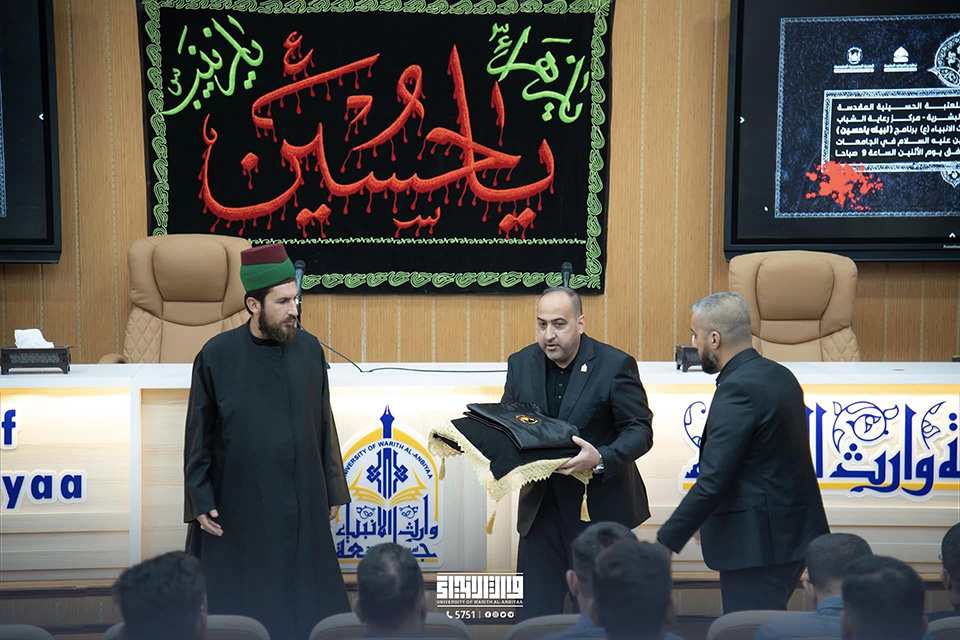
Warith Al-Anbiyaa Hosts Ceremony for Raising Imam Hussein's Black Flag
In collaboration with the Youth Care Centre of the Department of Human Resources Development at the Holy Shrine of Imam Hussein (PBUH), the University of Warith Al-Anbiyaa (PBUH) commemorated the ceremony of raising the black flag of Imam Hussein (PBUH) on the university campus. The university presidency and a number of teaching and professional staff attended the ceremony.
In his statement at the event, University President Professor Dr. Ibrahim Saeed Al-Hayawi emphasised that the revolution of Imam Hussein (PBUH) symbolises a revolution against injustice and corruption and that everyone should be inspired by it since it is a beacon for all people. He continued by saying that the purpose of raising the flag at the university is to inspire academics, staff members, and students to embrace and put into practice the moral, intellectual, and educational tenets of the Husseini Revolution.
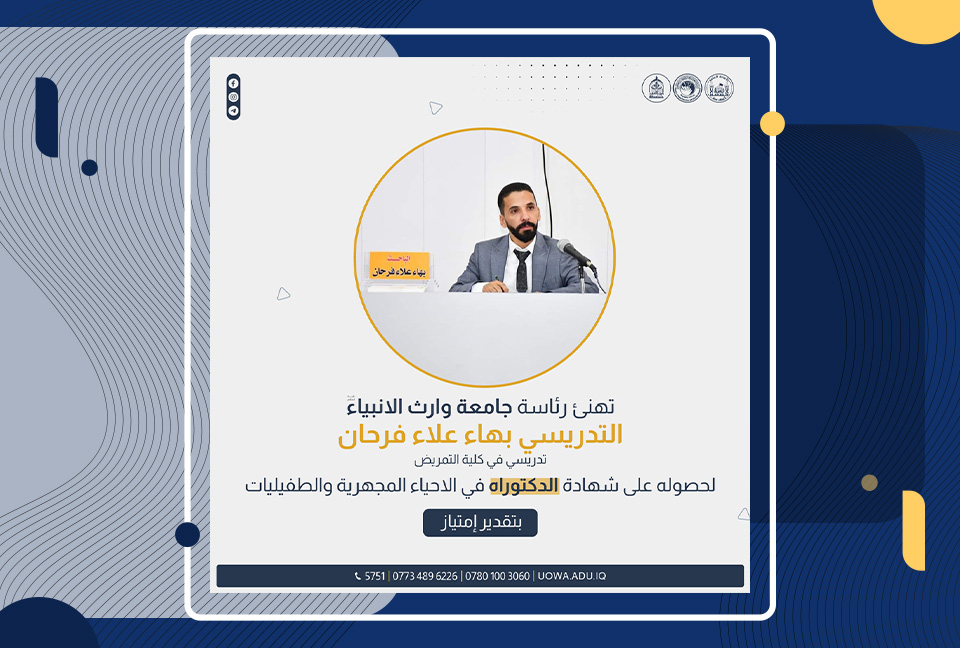
Warith Al-Anbiyaa Congratulates Dr. Bahaa Alaa Farhan on Ph.D. Achievement
The lecturer, Mr. Bahaa Alaa Farhan, has had the honour of successfully defending his
thesis, and has accordingly been awarded a Ph.D. in the field of microbiology and parasitology. The Presidency of the University of Warith Al-Anbiyaa and the Deanship of the College of Nursing extend their sincere congratulations and blessings on this momentous occasion. We wish him every success in his academic career.
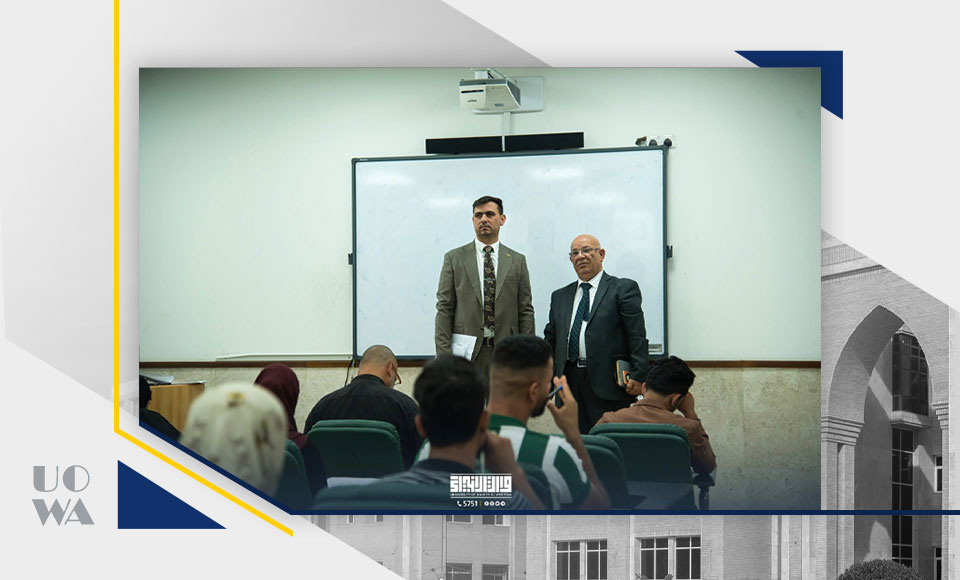
Final Exams Begin for Islamic Sciences and Administration & Economics Students
The final exams began for first-year students in the colleges of Islamic Sciences, and Administration and Economics, at the University of Warith Al-Anbiyaa (PBUH). We wish all our dear students the best of luck and success in their academic pursuits.
2024/07/12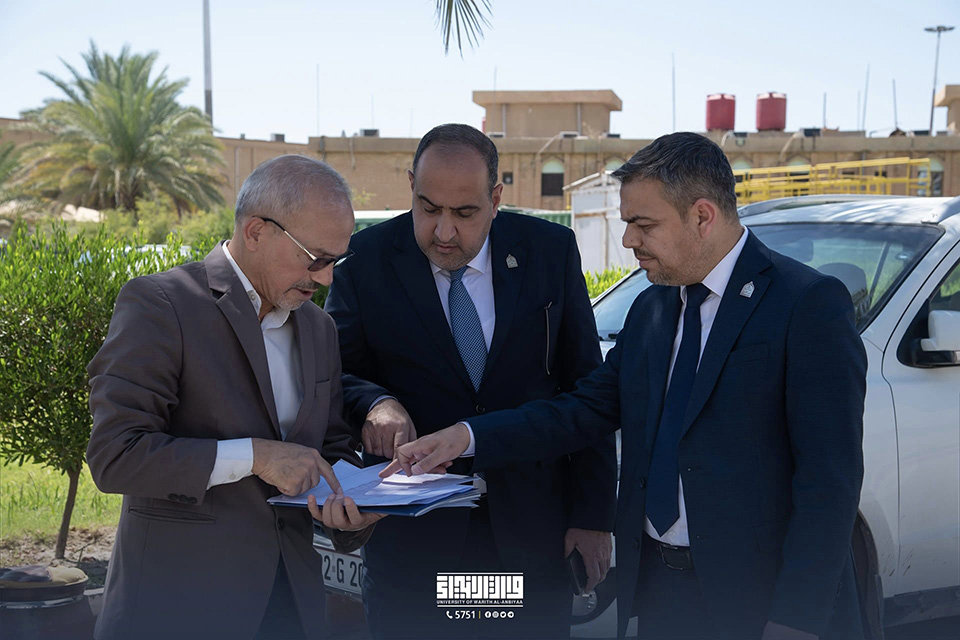
Warith Al-Anbiyaa President Inspects Expansion Projects for Coming Academic Year
Professor Dr. Ibrahim Al-Hayawi, President of the University of Warith Al-Anbiyaa, led a field trip with Professor Dr. Waqid Al-Moussawi, Vice President of Scientific Affairs, as part of the ongoing preparations for the upcoming academic year.
During the tour, advanced stage completion rates and the university's expansion projects were inspected.
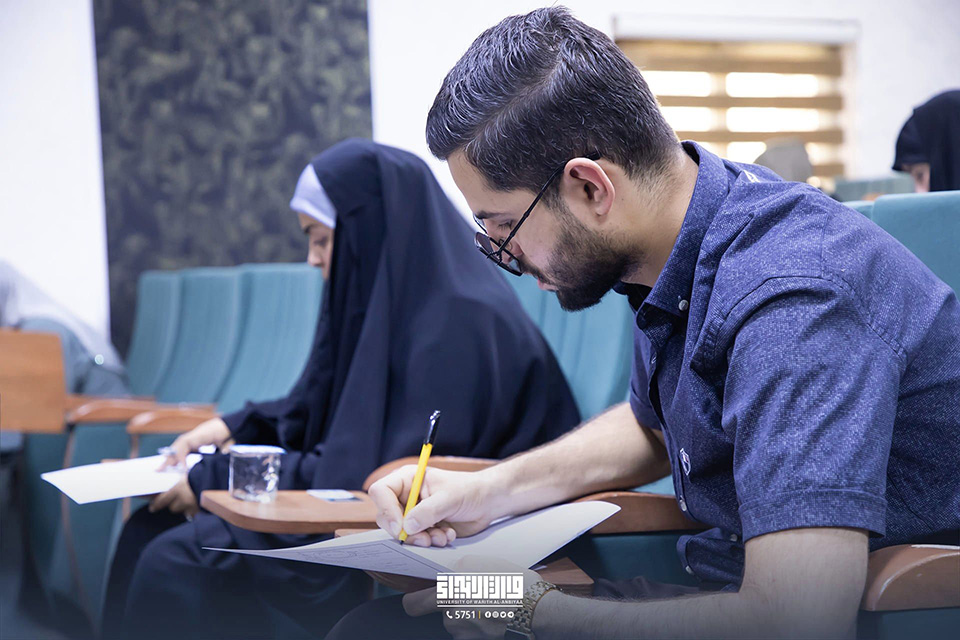
Final Exams for First-Year Law Students at Warith Al-Anbiyaa
The continuation of final exams for first-year students in the colleges and departments of the University of Warith Al-Anbiyaa (PBUH).
Our wishes to all our dear students for success