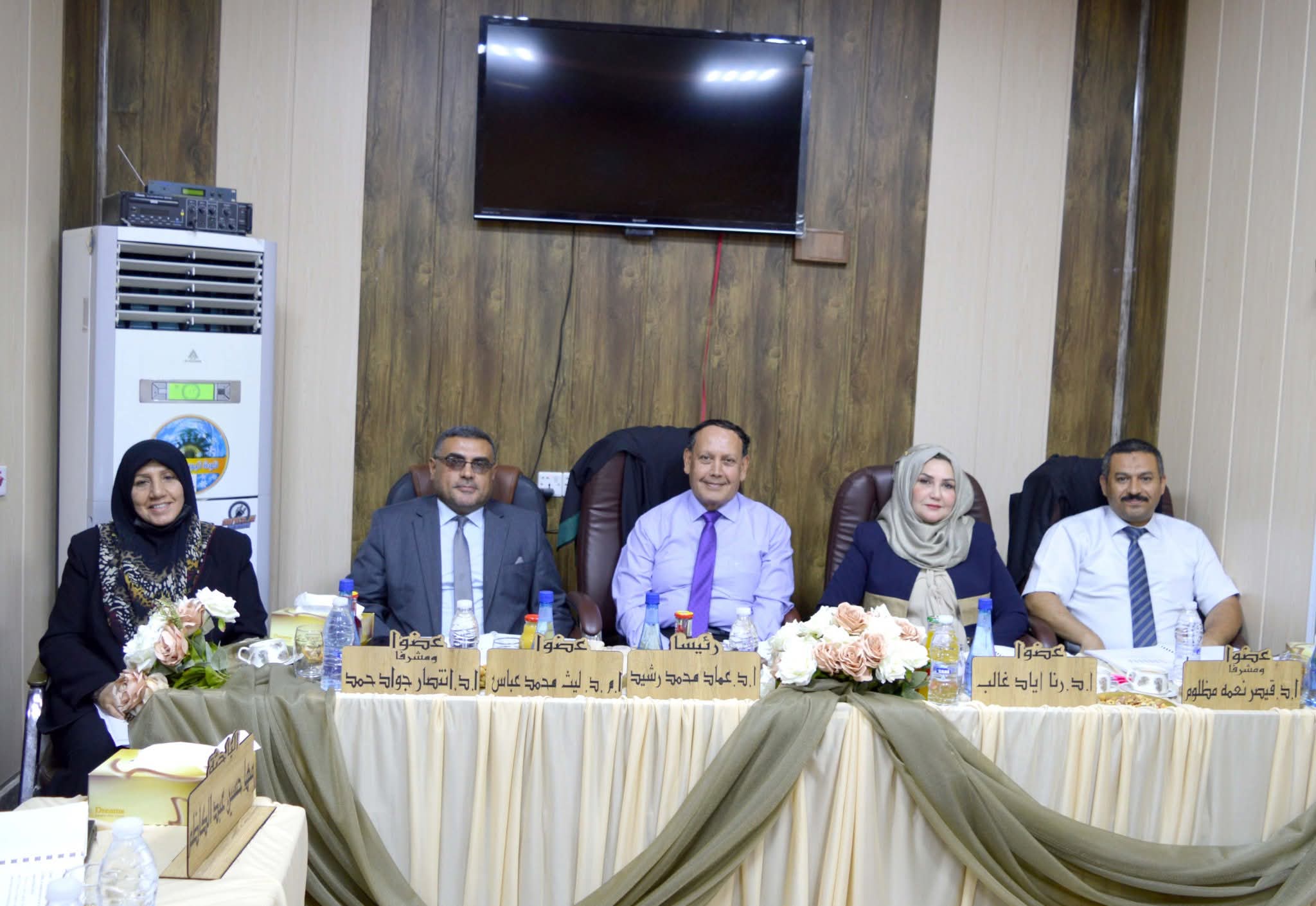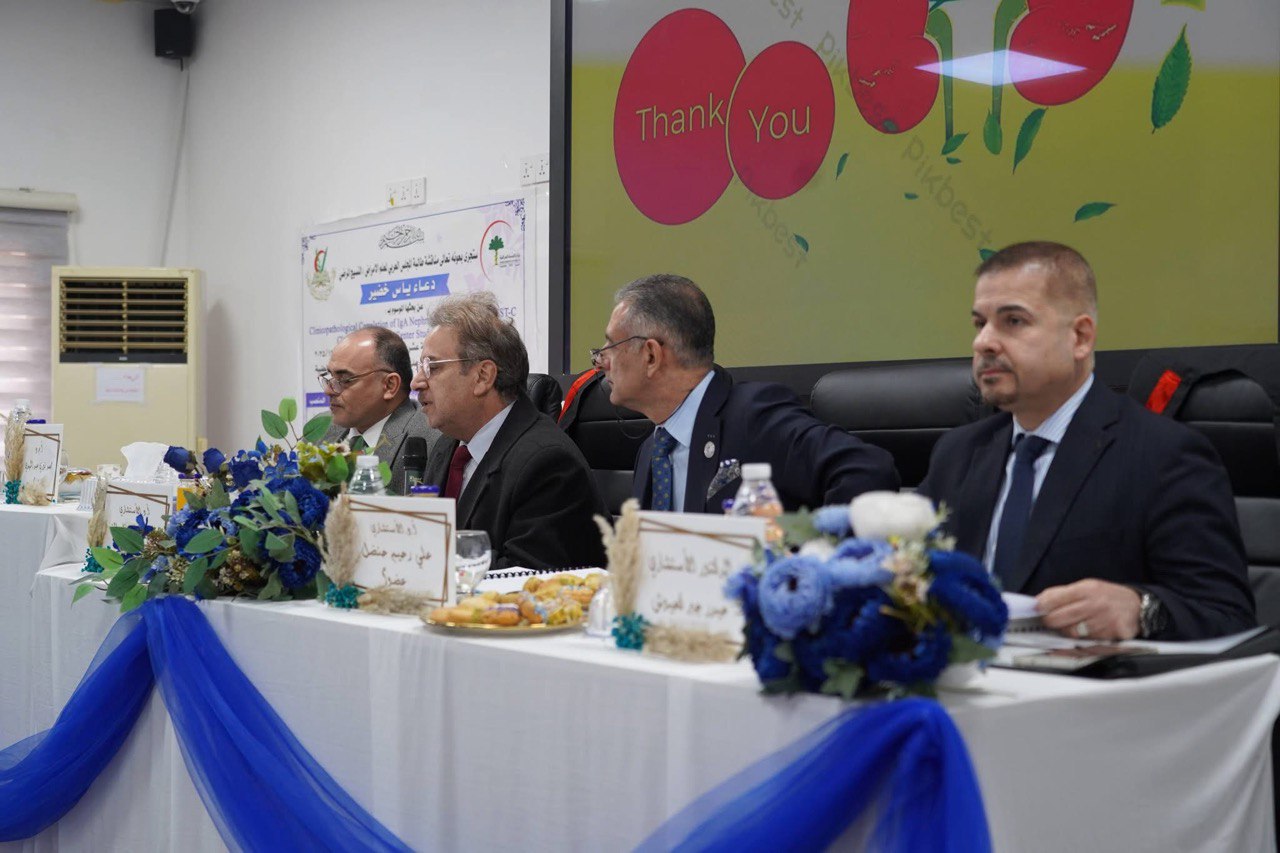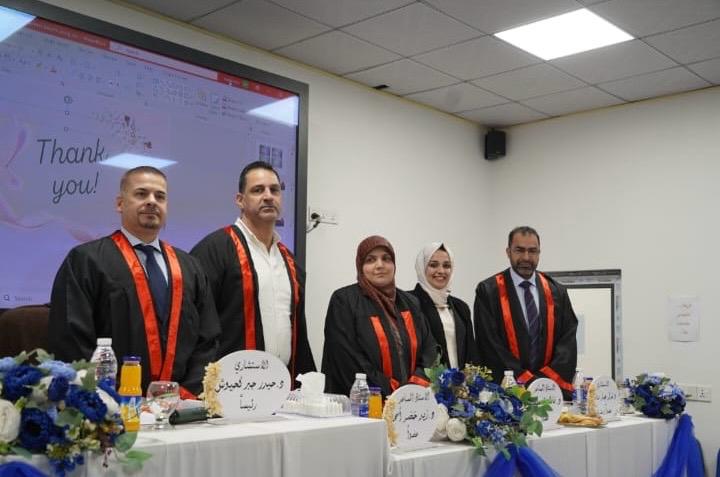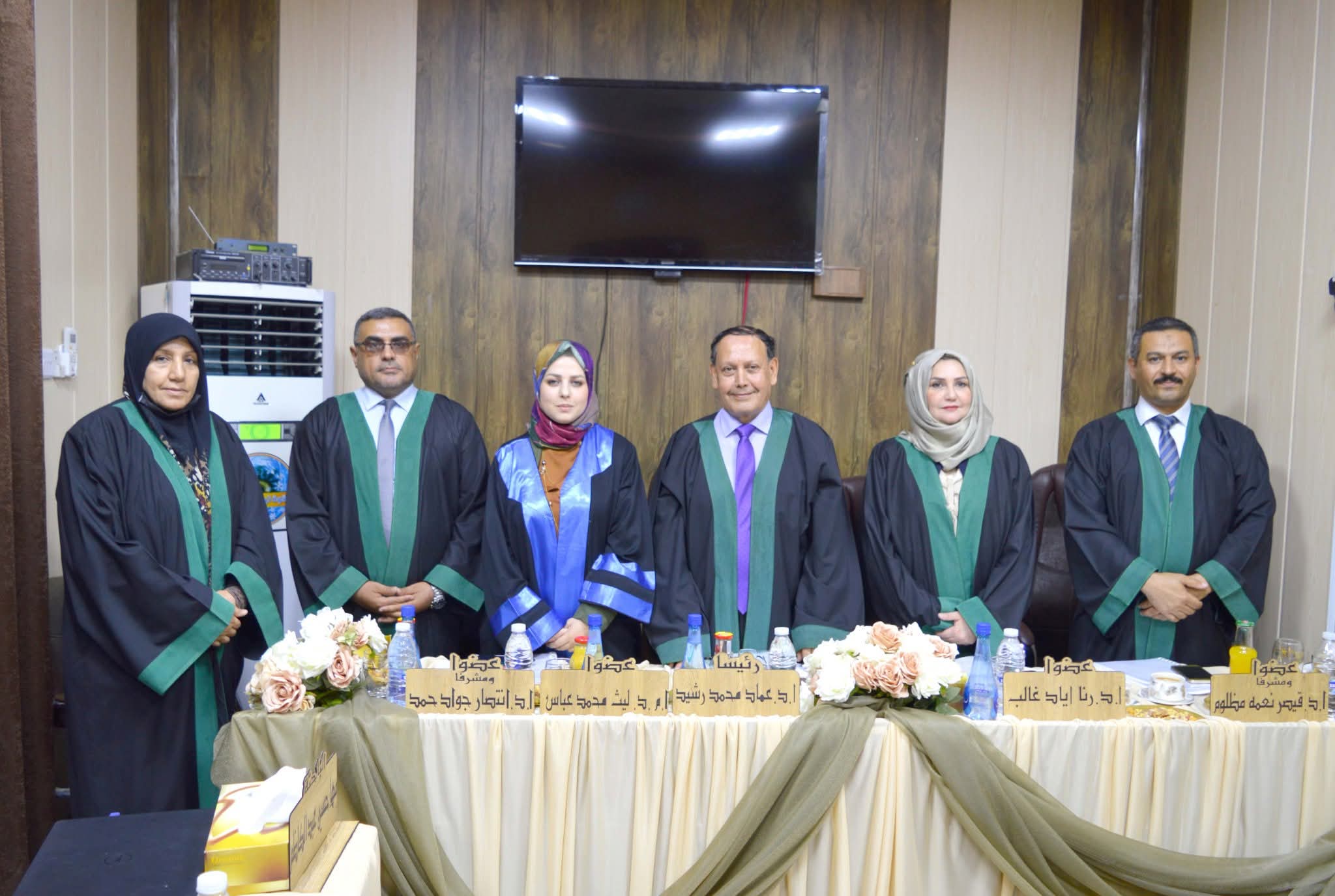


The Faculty of Medicine at the University of Babylon, specifically the Department of Pharmacology and Toxicology, hosted a rigorous public defense for the Master's thesis of student Maha Hussein Abdul Kadhim, titled "An In Vitro Study to Evaluate the Effect of Propolis Extracts on Normal and Cancer Cells." The defense witnessed distinguished attendance headed by Asst. Prof. Dr. Salman Mohammed Salman, Head of the Pharmacology and Toxicology Department, alongside several esteemed faculty members and postgraduate students.
The defense and examination committee consisted of an elite group of academic figures. It was chaired by Prof. Dr. Imad Mohammed Rashid, with memberships including Prof. Dr. Rana Iyad Ghalib, and Asst. Prof. Dr. Laith Mohammed Abbas Al-Husseini, Dean of the College of Pharmacy. The thesis was supervised by Prof. Dr. Intisar Jawad Hamad and Prof. Dr. Qaisar Nima Mazloum, who were also members of the committee.
During her scientific defense, the researcher reviewed the therapeutic importance of "Propolis" as a complex natural resinous substance collected by honeybees from various plants and geographical regions, possessing a rich history of medical applications. The study primarily focused on evaluating the cytotoxic effect of aqueous and ethanolic extracts of propolis against the leukemia cell line and the LNCaP prostate cancer cell line, comparing these effects with normal cell lines and lymphocytes isolated from healthy individuals. Furthermore, it evaluated the immunological effects of the extracts by measuring the levels of specific cytokines such as (IL-4, IL-10, IL-17, and IFN-) produced by these cells.
In her in vitro study, the researcher relied on the MTT cytotoxicity assay to evaluate cell viability and determine the half-maximal inhibitory concentration ($IC_{50}$) of the extracts. Additionally, she investigated the efficacy of the anti-cancer drug "Doxorubicin" alone or in combination with the ethanolic propolis extract against prostate cancer cells.
The study yielded promising scientific results. The aqueous propolis extract showed a highly significant decrease in the viability of leukemia cells, and all concentrations of both aqueous and ethanolic extracts caused a significant decrease in the viability of prostate cancer cells. In the search for combined therapeutic solutions, the combination of Doxorubicin at a concentration of (30 µg/ml) with the ethanolic extract at various concentrations demonstrated a highly significant decrease in prostate cancer cell viability. Conversely, the results proved the positive and safe effect of propolis on the body, as the aqueous and ethanolic extracts led to a significant increase in the viability of normal lymphocytes, accompanied by a significant increase in the levels of cytokines (IL-4, IL-10, and IFN-) at specific concentrations. Meanwhile, a clear decrease in the levels of these cytokines was observed within leukemia cells, opening new therapeutic horizons in this field.
College of Pharmacy Media Office